Episode VII

I know you’ve all be waiting for me to weigh in with an opinion about the new reboot of a long-standing film series that dates all the way back to the ‘70s. Indeed, it’s had a tremendously long, storied run, lighting up the box office for decades, and remains one of those pop-culture touchstones everybody knows and loves (either overtly or secretly, with some justifiable measure of both pride and shame). Beyond the original beloved trilogy, some of the later entries in the series have been panned with good reason. There was, however, a marked improvement in the last one to come out before the current offering, giving people hope that there might be life left in the old warhorse yet. So the question stands: now that we have a brand new blockbuster that closely mirrors the story and structure of the heralded original film, is it any good? Is it worth moving forward with another two, three or dozen sequels? Can the next generation of characters carry the brand name? Is the magic back?

I am, of course, talking about Creed, the seventh and latest part of the Rocky saga.

What else could I possibly be discussing?

Oh.

That.

Yeah, whatever, I saw that one too. Meh. If you want another opinion, pro or con, the internet is full of them. I don’t care enough to add to the noise.

So I spent bits of December rewatching every single Rocky film. Here’s a spoiler-laden recap of the series. If you haven’t seen any Rocky movies, you might want to give them a look before some idiot blogger blows any surprises for you.

Rocky (1976, Dir: John Avildsen)

The classic best-picture-winning original is grungy in a way that only exists in 1970s cinema. Small-time bum boxer (and leg-breaker for a loan shark) Rocky Balboa leads a pretty shitty life on the poverty-stricken streets of Philadelphia. His fondest wish is for his lowlife buddy, Paulie, to hook him up with Adrian, Paulie’s nerdy sister. But then, because this is America, land of opportunity, the heavyweight champion of the world, Apollo Creed, decides to give a random local boxer a shot at the title in honour of the coming bicentennial celebrations. Rocky gets picked, sight unseen, out of a directory of Philly fighters. What’s meant to be an easy victory for the champ turns into a real fight when Rocky seizes this opportunity to redeem himself after squandering his best years on sleazy matches and petty criminality. He pairs up with ancient boxing-gym owner Mickey and trains hard for the bout. Reality eventually catches up with Rocky, and he confides in Adrian that he knows he can’t win against the champ. His strategy switches to a heroic effort to last all fifteen rounds against the punishing blows of Apollo. Rocky goes the distance and loses to a split decision, knowing what he’s won – self-respect and Adrian’s love – is more important than the championship.

Rocky II (1979, Dir. Sylvester Stallone)

The oft-neglected Rocky II is actually a strong entry in the series that (sort of) remakes the original and changes the ending. Immediately following the events of the first fight, demands for a rematch abound, even though Rocky wants to get out of boxing. He marries Adrian, has a son with her, and lives the high life on the cash and endorsement deals that spring from his sudden fame. But it doesn’t last. The money quickly runs out because Rocky is a dummy who buys a lot of shit he doesn’t need. The endorsements fizzle because Rocky can’t read the cue cards for a simple TV commercial. Accepting the new challenge promises to put Rocky back in the black, but there’s more trouble when Adrian falls into a coma after a difficult birth. With the Apollo rematch pending, Rocky neglects his training to be by her side. When she finally wakes up and instructs him to win, Rocky returns to his training with renewed vigour. The climactic fight is every bit as brutal as the last one, ending in the final round when both men fall to the canvas. Rocky narrowly manages to get to his feet first, winning the title by default.

Rocky II is a unique sequel in that it perfectly understands where Rocky (having gone from the 1976 Best Picture Oscar to viable franchise) stands in the current pop culture lexicon. Everything that was well received in the original is back in spades, with much more emphasis on invigorating training sequences and the epic boxing match (both of which were surprisingly short-changed in the original). There are also many self-aware one-liners and asides that are funny and nicely underplayed – my favourite being when one reporter asks Rocky if he’s suffered any brain damage. “Not that I can see,” Rocky mumbles with genuine sincerity.

Rocky III (1982, Dir: Sylvester Stallone)

After Mickey sets him up with a series of relatively easy victories to defend his new title, Rocky faces a real challenge in the form of young, hungry and mean fighter, Clubber Lang (Mr. T exploding into the public consciousness in his film debut). Mickey tries to protect him from this fierce new opponent but Rocky insists on fighting him in the name of pride. Rocky’s training for the match proves to be a bust when he spends too much time soaking up public adulation and the trappings of fame and fortune. Mickey falls ill the night of the fight after a locker room altercation with Lang, leaving Rocky shaken before entering the ring. Suffering a quick and decisive defeat, Rocky returns backstage only to watch his mentor slip away and die before help can arrive.

Utterly depressed, Rocky wallows in failure until Apollo Creed comes back into his life and offers to train him for a rematch against the villainous Lang. After relocating to the mean streets of L.A., and receiving a head-clearing pep talk from Adrian, Rocky regains his spirit as a hungry street fighter once again and returns to the ring long enough to satisfyingly beat the tar out of Clubber Lang and win back the title.

Following the grittiness of the 70s films, the first Rocky of the 80s suddenly looks very slick. The training and fighting scenes hit a new level of indulgence that goes past satisfying the audience and into pandering territory. But, undeniably, it works. Rocky III stands among the most crowd-pleasing of the franchise, although it’s impossible to ignore that the first hints of genuine stupidity (beyond Rocky’s own dumb-guy persona) are beginning to slip into the series. The scene with Hulk Hogan as Thunderlips is very silly and suffers greatly from its reluctance to admit professional wrestling is all pretend stagecraft – probably for fear of disillusioning many in the gullible target audience.

The original plan was to end the series as a solid trilogy. But this is Hollywood. And a sure moneymaker must always be squeezed dry.

Rocky IV (1985, Dir: Sylvester Stallone)

Russian superman, Ivan Drago, is the latest, greatest athlete created by evil cheating commie science technology. An exhibition match is arranged in Las Vegas to show off his superior boxing ability. Rocky is the proposed adversary, but Apollo Creed is the one to accept the initial challenge and promptly gets beaten to death in the ring. Rocky blames himself for not throwing in the towel and ending the fight earlier. After the obligatory weepy funeral scene, Rocky agrees to fight the Russian champ in Moscow, despite Adrian’s worried insistence, “You can’t win!”

After lots and lots of training footage (Drago in a high-tech gym-lab, Rocky at a remote woodsy cabin for contrast) the two meet in the ring. The dirty reds boo Rocky until the plucky American keeps coming at their inhuman steroid monster despite being knocked down numerous times. Winning over the crowd, Rocky also wins the fight, showing Drago that the “A” in “U.S.A.” is for asskicking. His final warm-hearted cold-war speech assures the Russian people that it’s better to watch two guys killing each other in the ring than twenty million in a nuclear war.

Rocky IV is the shortest Rocky film, which is nice, because it’s also the worst. Utterly stupid from start to finish, it’s still an entertaining piece of Reagan-era propaganda. I’d be much more forgiving of it if it weren’t for Paulie’s robot girlfriend. No, seriously, the disgusting meat-packer slob Paulie gets a robot girlfriend in this one. As if the rest of the film weren’t enough of a terrible comic strip.

Rocky V (1990, Dir: John Avildsen)

Much maligned, Rocky V is panned as the worst of the series. It isn’t. Rocky IV is far worse. Rocky V, weak as it is, benefits enormously from its attempt to return the series to some semblance of reality. After Paulie gives power of attorney to a crooked accountant during their trip to Russia (damn you, Paulie!) the Balboas come back to find their hard-won riches stripped away. With debt and back-taxes piling up, they have to sell the mansion and all their stuff and return to a humble existence in the old neighbourhood of shitsville Philly. After years of head shots, Rocky has suffered too much brain trauma to get certified to fight anymore. He quits boxing and runs Mickey’s old gym as his new career.

Rocky tries to rebuild his relationship with his disappointed son, but gets distracted by an ambitious young fighter named Tommy Gunn who is determined to get Rocky to train him. Under Rocky’s tutelage, Gunn quickly rises in the ranks. A title shot is in the cards, but an obnoxious boxing promotor (obviously based on Don King) seduces Gunn away from Rocky and fast-tracks him to the championship. Although Rocky wishes him well, Gunn remains unhappy when reporters continue to think of him as Rocky’s puppet who only defeated a “paper champ” – the one who inherited the title after Rocky retired undefeated.

At the promotor’s insistence, Tommy Gunn returns to Rocky’s neighbourhood to challenge the aging boxer to a fight. After punching out Paulie, Gunn gets the fight he wants – but it’s a street fight, with no money to be had for the pugilists or the promoter. The two men go at each other bare knuckles, with all the cheap shots you might expect outside of a regulation ring with no referee. Although Rocky ends up flat on the pavement at one point, a hallucination of Mickey encouraging him to go one more round gets him back on his feet long enough to beat Tommy into submission. For good measure, Rocky punches out the corrupt promotor, despite threats of a lawsuit. Rocky, after all, has no money left to be sued for.

Even Stallone hates this film, but the ire is misplaced. It’s nowhere near the quality of the original trilogy, but it’s not a particularly bad movie if you care about the characters and want to keep following their misadventures. More importantly, it’s a first step back towards the Rocky series that had heart, was grounded, and had its brain-damaged head screwed on straight. It was the promise of better things to come.

Rocky Balboa (2006, Dir: Sylvester Stallone)

For years, everyone thought Rocky V was the final nail in the Rocky coffin. Then, seemingly out of nowhere, Sylvester Stallone announced he was working on yet another Rocky movie (this one without a numeral in the title). Rocky Balboa went on to be the most surprising film of 2006. It had every right to be absolutely terrible and turned out to be shockingly good.

Since the previous film, Rocky’s finances have recovered enough for him to buy a small restaurant and name it “Adrian’s” after his late wife. Yes, Adrian has since died of cancer. The fact that Talia Shire doesn’t return as Adrian, the love-interest and heart of the Rocky series, should have been a fatal blow to the franchise. Instead it becomes the film’s greatest strength. Her presence is felt more here than it was in any of the previous few films. Rocky is lost without her, and that fact elevates the story rather than diminishes it. Paulie, of course, persists like the cockroach he is, and remains, for better or worse, in Rocky’s corner.

Running his restaurant day to day, Rocky is living in the past, sharing his old boxing stories with disinterested customers and coming to realize that the world has passed him by. Meanwhile, ESPN runs a computer simulation of how a boxing match between the current champ, Mason Dixon, and Rocky in his prime might turn out. When the computer suggests Rocky would win by knock-out, Dixon’s ego is bruised, and there’s talk of a high-profile exhibition bout. Rocky decides he wants to do it, despite being way over the hill. Training for the fight provides the excuse for him to reconcile with his son, who joins Team Rocky.

What’s supposed to be a just-for-shits-and-giggles bit of theatre with an old man dancing around the ring with a young man gets serious when Dixon discovers Rocky is fighting for real. The body blows are hard, and while the fight never turns into a brutal, bloody grudge match like those of Rocky’s youth, it’s genuine enough for the new champ to learn a thing or two from the old champ. After going the distance one last time, Rocky leaves the ring to the ovation of the crowd, not even waiting for the academic split decision that declares Dixon the winner. One final, sentimental visit to Adrian’s grave and Rocky literally fades away into the background, promising the end of the Rocky series once and for all. Except it wasn’t.

Creed (2015, Dir: Ryan Coogler)

Adonis is another young, hungry fighter, skipping off to box in Mexico, away from prying eyes. Unlike Rocky, he’s smart and affluent, with a high-paying desk job and a new promotion. Despite having every advantage, there’s something in him that wants to fight – needs to fight. Dissatisfied with his life, he quits and moves to Philadelphia, seeking out the legendary boxer, Rocky Balboa.

Looking up Rocky at his restaurant, Adrian’s, Adonis reveals that he’s Apollo Creed’s illegitimate son, and prevails on Rocky’s sentimentality for family and friends. At this point, all the supporting Rocky characters are dead, and even the son has moved away to Vancouver. A combination of loneliness and residual guilt over Apollo’s death leads Rocky to latch on to Adonis and agree to train him.

After his mainstream boxing debut, word gets out that Adonis is Apollo’s son, and suddenly all eyes are focused on Rocky’s new protégé. The current champ, facing forced retirement due to a pending jail term, seeks to set up a last spectacle fight and chooses Adonis as his opponent. The catch is, Adonis is expected to take his father’s name and call himself “Creed” for publicity purposes. At first, Adonis refuses, fixated on making his own name for himself. Eventually, however, he accepts the name as his rightful legacy and agrees to the terms.

While Adonis faces the fight of his life, Rocky faces a fight for his life. Diagnosed with cancer, Rocky refuses treatment after seeing how little good it did for Adrian. Adonis won’t let Rocky off the hook so easily, and encourages him to undergo chemotherapy with the words, “If I fight, you fight.” Rocky continues to train the young fighter, even through debilitating nausea and weakness. With the training and the cancer treatment complete, Rocky and Adonis fly overseas for the big fight. Adonis proves himself in the ring, going the distance just like Rocky once did and, again like his mentor, losing to a split decision. Having won his respect, the champ tells Adonis that he’s the future of their boxing division, and the promise of a Creed II is sealed by the critical acclaim and box office returns.

The Rocky series has been around for most of my life. I saw every one of them in the theatre during their original run (except Rocky V because, like everyone else, I’d stopped giving a shit when that one came out). Criticism that they’re schmaltzy and sentimental is well taken, but they’re proficiently engineered to push all the right buttons and consistently work, even at their lowest ebb. The last two restored my faith in the series going forward even though, each time over the last twenty-five years, I’ve been surprised somebody bothered to make yet another one.

Rocky has been the crown jewel of Stallone’s career. He’s made a lot of very bad movies and he knows it. Despite his need to stretch Rocky thin and relentlessly revisit the character, he’s done so with a degree of respect and tenderness that’s kept the movies from becoming a joke (even though Rocky has been the subject of many jokes ever since the days it won an Oscar over better pictures like Network and Taxi Driver). After desperately wanting him to leave it alone following the note-perfect closing shot of Rocky Balboa, I find myself actively hoping the series will continue in the wake of the success of Creed. It’s not that Creed is fantastic or surprising cinema. But it’s solid cinema – mainstream but low-key, exciting but not overplayed. It’s the sort of honest storytelling that’s willing to show its handsome new leading man, fit and trim, sexy and confident, get the nervous shits before a big fight. I like that. I want to see more of that. It rings truer than, for example, jedi warriors using magic and laser swords to save the universe in a less-engaging, less-grounded, unchallenging and safe Part Seven of a series that refuses to die.

Besides, let’s face it, at this point in history, there are more good Rocky movies than there are good Star Wars movies. That’s a fact. Deal with it.
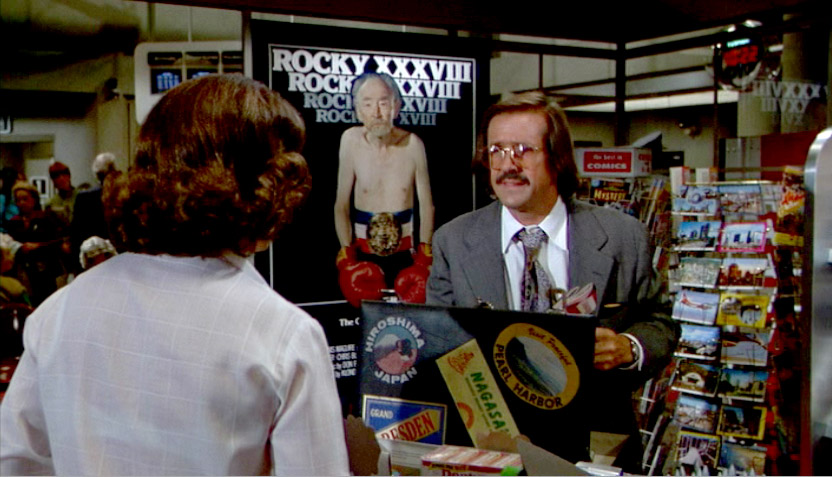
The poster for Rocky 38 from Airplane II: The Sequel. It was a throwaway joke back in 1982, when there were only three Rocky films. Now it doesn’t seem beyond the realm of possibility. Expect James Bond and Star Wars to get there first, though.
The poster for Rocky 38 from Airplane II: The Sequel. It was a throwaway joke back in 1982, when there were only three Rocky films. Now it doesn’t seem beyond the realm of possibility. Expect James Bond and Star Wars to get there first, though.
Reading Material

Last week I got hit by a triple load of releases. One anthology appearance had been scheduled for months, but the other two caught me by surprise. I knew they were coming, but I didn’t know when.

As mentioned here before, my story “When the Trains Run on Time” is in Playground of Lost Toys. Edited by Colleen Anderson and Ursula Pflug, this is book eleven of Exile’s anthology series. I was already in book ten, New Canadian Noir, earlier this year, so that’s a double-header from Exile Editions.

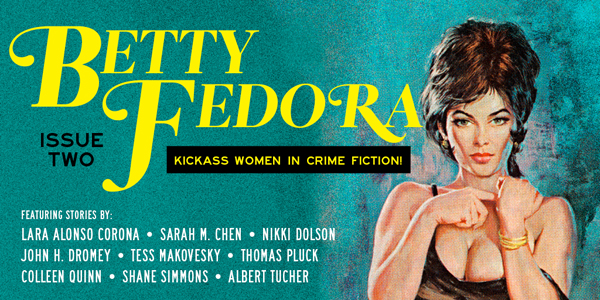
Speaking of my criminal enterprises, we have Betty Fedora Issue Two: Kickass Women in Crime Fiction, edited by Kristen Valentine of (you guessed it) Betty Fedora. “Heads Will Roll” is the lead story. As such, you can read most of it for free by checking out the Kindle preview on Amazon. But to make it all the way to the punchline, you’ll have to shell out for a copy. An e-copy of the whole book will run you a buck.

betty_fedora_2If you want to read some of my genre work and you’re too cheap to shell out as little as 99 cents, “Black Ink” is available for free from Out of the Gutter Online. It’s the shortest of the three new stories and probably the nastiest, if that’s what turns your thumbscrews.

More stories are on the way, as listed on eyestrain’s anthologies page. At this late day, I figure I’m probably done for 2015. But starting almost immediately in 2016, “The Last Seven Miles and Home” has just been slated to appear in Bumps in the Road from Black Bed Sheet Books. “Bayonet Baby” gets another kick at the can in Illuminati at My Door in March. And there’s another major piece I’m not allowed to mention yet, but I look forward to adding that intriguing cover to the website once I get the go-ahead.

Since I’m on a roll with new material, I figured it was time to link to some of my old material on the articles page. These two entries were essays I wrote semi-anonymously online, but they’re still drawing eyes from time to time, so I thought I should finally cop to being the author.

“Tourist Fakes: The Quest” is an epic saga I wrote about a trip to the Mediterranean five years ago and my attempts to be willingly conned by scam artists. Is a con still a con if it’s consensual? Decide for yourself as you peruse parts 1, 2, 3, 4 and 5.

“Whatever Happened to Mr. Pink” dates back twenty-two years and is still chugging along. Written before the web was a thing, when most people (myself included) didn’t even have their own email address, this film-nerd dissection of a controversial scene in a (then) fairly obscure cult movie by some writer/director newbie has been cut and pasted by others many times, cropping up on numerous websites once that web thing finally got popular and took off.

That does it for now. Sometime in the near future, I promise to write something entertaining on the blog that isn’t shameless self-promotion.

Poe?

It’s that time of year.

Time to listen to Christopher Walken read The Raven.

And remember…ripcookie

Enjoy Halloween, because life is shortbread.


Launch Padding

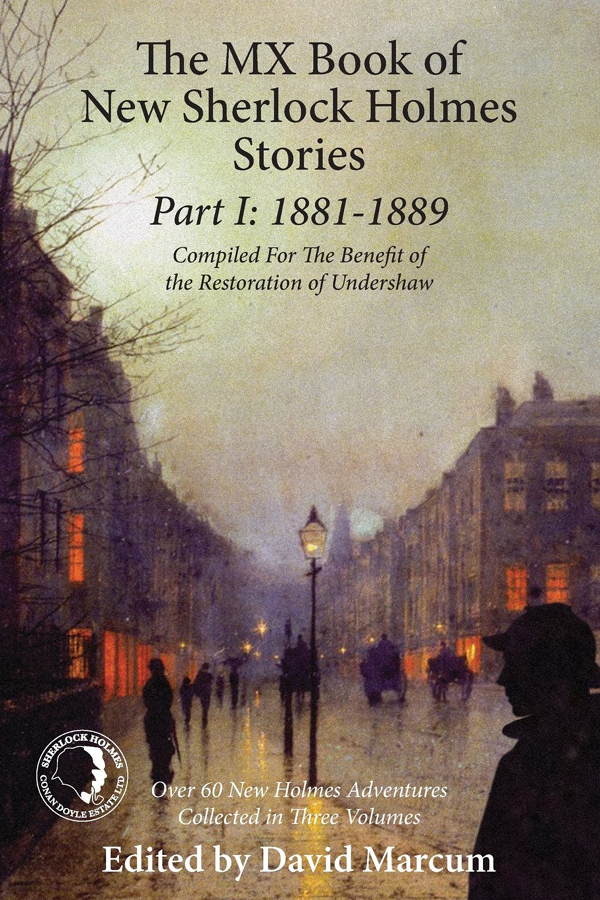
The MX Book of New Sherlock Holmes Stories (with one of my stories in the first volume) was released this month and is now available from Amazon, and other fine bookstores that don’t subject anyone to the goddamn Amazon Prime program, like Barnes and Noble and The Book Depository.

Now with the official seal of approval from the Conan Doyle estate.

Now with the official seal of approval from the Conan Doyle estate.

The launch party was held October 1, at London’s Heron Tower. Even before the big day, it was the best seller in Amazon’s Sherlock Holmes category. Upon release, physical copies sold out on the site in the first three hours. Since then, they’ve had new copies come in and sell out at regular intervals. The supply and demand has yet to stabilize, so grab your copies, hardcover, paperback or ebook, where and when you can.

Philip K. Jones. Sherlock-Holmes pastiche expert, is the first reviewer to go on record, calling it the finest volume of Sherlockian fiction he’s ever read — and he’s only made it through volume one of three so far. This from a guy who keeps an online database about Holmes and Watson and reads EVERYTHING to do with the consulting detective and his pet doctor.

A number of related articles have been saved in my browser for too long now, and I should get around to linking to them…

The Melbourne Review of Books did a nice interview with fellow contributing author, Wendy C. Fries.

The Sherlock Holmes Society of India interviewed publisher, Steve Emecz, prior to release. At the launch, he announced plans for an edition of the anthology in India. Other countries may follow.

Finally, there’s a lengthy interview of editor, David Marcum by The Baker Street Babes. Scroll to the end, and you’ll see a specific mention of me, my story — “The Song of the Mudlark” — and future plans for new tales of Wiggins and The Irregulars down the road.

Now that we’re past all that, the next anthology I’m in has gone to press. Playground of Lost Toys will be out at the beginning of December with my new story, “When the Trains Run on Time.” Here’s the final cover:playgroundoflosttoys

Three more anthology appearances are already in the queue after that. Plus some other major news that’s just crossed my desk. It’s too early to announce anything or show you cover art, but I have an explosion of material coming out through to the end of the year and into 2016.

As for now… Back to my editing and rereading chores. Groan.

The Unspeakable

There’s no nice way to say this. Corpses crap themselves, and steps must be taken. You don’t want a group of mourners standing around a casket with a “Who farted?” expression on their faces, only to realize, after exchanging accusatory glances, that the perpetrator was the one in the box. That’s not a final memory anybody wants of mom or dad or aunt Josephine.

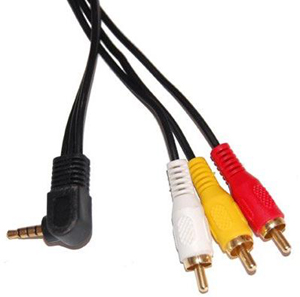
Funeral science has, through much trial and error no doubt, developed the A.V. plug. It’s a plastic device that’s half screw, half butt plug, and is used to stop up one or more holes that might develop some unfortunate leakage before a corpse is safely planted in the ground. I know about these sorts of things because I’m morbid, but I’m not an expert. So when the A.V. plug came up as a recent topic of discussion, I felt compelled to ask around.

No, not these.

No, not these.

ACTUAL TRANSCRIPT OF THE SORT OF CONVERSATION THAT HAPPENS IN MY HOUSE:

Me (in all seriousness): Do you know what the A.V. stands for in A.V. plug?

Her: There’s two holes down there.

Me: Ah. I was hoping it stood for something classy like “alimentary viscera.”

Her: I’m eating.

Me (shutting up): Right.

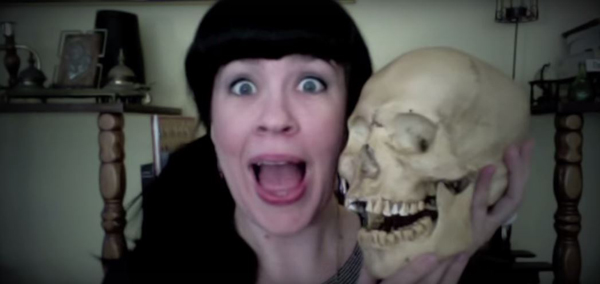
Recent research (and by “research” I mean “roaming around the dark corners of the web looking for sick and twisted things”) led me to my new favourite website, The Order of the Good Death. It’s run by Los Angeles funeral director Caitlin Doughty, who is the author of Smoke Gets in Your Eyes: And Other Lessons from the Crematory and creator of the hilarious video series, Ask a Mortician.

I’ve long been aware of how the monopoly of modern funeral rites is ruining death for everyone, and it’s nice to see groups advocating alternatives a mere fifty-two years since Jessica Mitford wrote The American Way of Death, exposing the gouging that goes on in the industry.

I know this sort of thing is not everyone’s cup of tea, but it warms my cold jaded heart that the web provides such valuable information resources about the nitty-gritty that goes on behind the scenes whenever somebody’s loved one (or unloved one) snuffs it. Including what gets shoved up their ass.

I highly recommend you take time out from watching funny YouTube cat videos to watch some of Caitlin’s funny YouTube death videos. Spoiler alert: there’s a funny cat in some of them.

Caitlin Doughty and friend.

Caitlin Doughty and friend.

Pardon the shameless plug. Plug? Get it? Haw!

There are only three days left in The MX Book of New Sherlock Holmes Stories Kickstarter campaign. All goals have been met, but if you want to get your copies ahead of the rest of the world, this is your last chance.

Short News About Short Stories

The MX Book of New Sherlock Holmes Stories has reached its secondary goal of £10,000 in their Kickstarter campaign. Although they now have all the cash they were shooting for, you can still merrily contribute in order to get your copies of the three-volume set (or any individual volume) in a format of your choice before anyone else, including the major retailers.

Interviews with the authors of Volume One (myself included) has appeared on I Hear of Sherlock Everywhere. This will be followed by two more sets of interviews for Volumes Two and Three. Check them out if you want to see what makes a bunch of Sherlockians tick. Or if you care to read whatever I blathered on about for “The Song of the Mudlark.”

In other anthology news, my next story, “When the Trains Run on Time,” will be featured in Exile Editions’ The Playground of Lost Toys this fall. Co-editor Colleen Anderson was recently discussing the book and its lineup on her blog. No cover art yet (which is one of the issues she writes about), but I remain watchful. New cover art for a publication I’m in always tickles me.

More announcements are queued up, but I’m stuck waiting for official announcements, air dates and/or contracts. You know, the usual bottlenecks.

A Three Part Problem

When I was a wee nerdling, I once attended a meeting of The Bimetallic Question. It may sound like a sinister secret society, but it’s only the Montreal incarnation of the usual sort of Sherlock Holmes fan club you’ll find sprinkled throughout the world. To this day, they get together once every couple of months in someplace suitably stodgy, talk about Sherlock Holmes, and act all Victorian. Or, if they’re particularly progressively minded, Edwardian.

A highlight of the evening is a quiz about one of Sir Arthur Conan Doyle’s stories. They select a sample from the canon, encourage everyone to refresh their memory, and then ask trivia questions at the gathering. The winner gets a prize, as I recall. This was so long ago, I hadn’t finished reading all sixty of the original adventures. So when I was told we’d be questioned about the contents of The Veiled Lodger, I had to skip ahead and read that one early.

“It’s not very good,” the organizer on the phone warned me in advance.

Sacrilege from a Sherlockian. It was like hearing a Trekkie admit that one of the episodes of The Original Series kinda sucked.

He was right, of course. It wasn’t very good. Conan Doyle was slipping in those last years of his life. After killing off Sherlock Holmes and then bringing him back from the dead due to public demand, his heart often wasn’t in it. There are plenty of gems to be found in those final collections, but some of the stories are lazy rehashes of earlier, better work – or worse, dull original material that lacks the spark that made the characters successful in the first place.

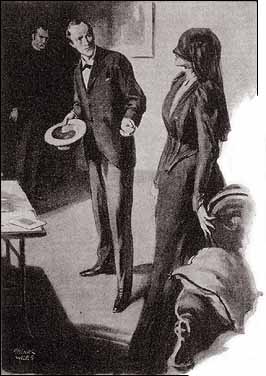
A tasteful illustration rather than the lured money shot modern audience might prefer.

A tasteful illustration rather than the lurid money shot modern audiences might prefer.

The Veiled Lodger is one of those latter examples. It hardly even qualifies as a mystery. Holmes and Watson are summoned to hear a confession from a woman about a case the consulting detective once looked into but didn’t solve because he was never officially engaged. It all plays out as an excuse to get to the shocking finale where the veiled lady raises her veil to reveal what’s left of her face after it got chewed off by a lion. Where’s the accompanying Sidney Paget illustration for this one, I ask you? Okay, he was dead by the time it was published in 1927, but Frank Wiles, his successor, might have come up with something appropriately grisly. I blame The Strand editors for wussing out on the opportunity to horrify its readership.

As is often the case with many characters that endure long after the death of their creators, some of the most intriguing stories were written by subsequent authors. This will irritate purists, but my favourite adventures are often ones created by writers who were free to run with the groundwork Conan Doyle laid decades before them and make sense of his often egregious continuity errors. I’m particularly fond of Nicholas Meyer’s The Seven-Per-Cent Solution and what Billy Wilder accomplished as screenwriter and director of The Private Life of Sherlock Holmes (I will forever lament the hour that was cut and largely lost by the studio).

Those examples hardly scratch the surface of what’s out there. As copyrights expired and the property slipped into the public domain, tremendous numbers of pastiches were written and filmed, including far more novels and short stories than Conan Doyle ever managed in his career. I have a good number of them, big and small, in my library. Now I’m looking forward to adding The MX Book of New Sherlock Holmes Stories in the fall – for reasons both selfish and charitable. This record-breaking collection is the largest of its type ever assembled, and will feature sixty new adventures of Holmes and Watson set in their proper time period and fitting in with established continuity (tortured as it might sometimes be).

My story, The Song of the Mudlark, will be among the sixty in this three-volume set that will be available in hardcover, paperback and eBook. All royalties will go to the Undershaw Preservation Trust which is restoring the house Sir Arthur Conan Doyle built and lived in while he was writing certain notable tales like The Hound of the Baskervilles and The Empty House (the one that revived the detective after a long hiatus). The Undershaw property is being prepared as the new location for the Stepping Stones school for children with learning difficulties, and they’ll be moving in once the renovations are done.

Undershaw back in the day.

Undershaw back in the day.

If you’d like to put in an early order and get your copy before everybody else, there’s a Kickstarter page with the usual levels of contribution, depending on how flush you feel. They blew through the initial goal of £2000 within the first couple of days, but the preferred total is £10,000, which will help enormously with the shipping costs of all these heavy tomes.

Additional information about the project and Undershaw can be had in this recent article and this interview with the publisher and editor. Stepping Stones also has a page of their website devoted to the work on Undershaw as its new home.

Rogue Gallery

So apparently I’m an internationally renowned artist. Again.

Longshot Comics will be making an appearance in Talking Pictures Blue (Voices Rising) at the Songwon Art Centre in Seoul, South Korea this coming month, from June 12 to July 12.

I just wish someone had told me.

The only reason I know about it is that it came across my Facebook feed today. Nobody linked me to it, sent me an email, gave me a call or, you know, comped me plane tickets and a hotel stay overseas. It just sort of came up. I would have scrolled right past it if I hadn’t recognized some very familiar word balloons I toiled over twenty-two years ago.

songwon

The bottom right hand corner called out to me from the morass of Facebook updates about babies, pets, politics and the dumb meme-de-jour.

To quote the mission statement for this particular exhibit, “With its point of departure in the world-wide image industries of the 19th century, this exhibition focuses on a mythical structure in contemporary thinking about mediatised images: According to this myth, artists’ pictures must ‘talk’ by themselves, or they will be considered secondary, derivative, or even irrelevant.” There’s plenty more where that came from.

So, uh, I guess if you’re in the Buk-Chon neighbourhood in the coming weeks, drop by. Take some pictures. And email them to me so I can know what I’ve gotten myself involved in this time.

My Twitter project, 140 Fantastic Characters, wrapped up recently and is now collected on its appropriate sub-page. This past week has seen the next leg commence with 140 Super Characters – just in time for summer blockbuster season when we get swamped with superhero franchise films and news about what other superhero franchise films will be clogging up screens by this time next year.

It, too, will be collected on its own page bit by bit. Or you can read the daily thread by following me on Twitter.

Badge of Honour

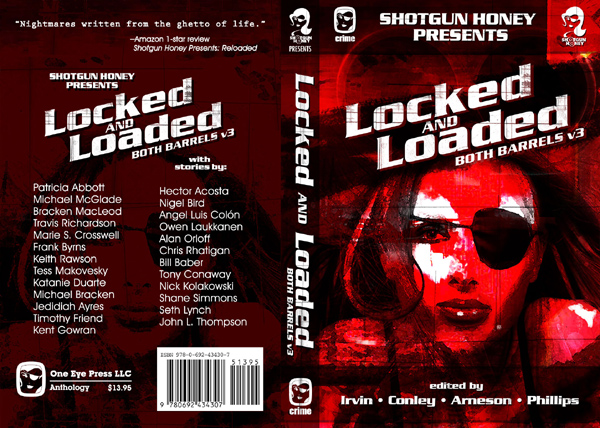
There was a slight delay, but Locked and Loaded: Both Barrels Vol. 3 was released last week and is now available in physical and eBook forms. I haven’t received my pulp copies yet, but this new scan reveals the back cover for the first time and something I always like to see – a negative review.

“Nightmares written from the ghetto of life,” denounces the one-star Amazon review for the previous volume of the series.lalfrontandback

I looked it up, and this particular review (the only negative one for the book, in fact) came from one Betty Jonas, currently ranked number 30,511,827 on Amazon’s top reviewer list with only three reviews to her name. So, yeah, not exactly Roger Ebert. Checking out her other opinions, I was greatly amused by her summary of The Busy Writer’s Tips on Writing Mystery and Crime, which suggested, “You never know, you, or even I, might be the next Mike Hammer.” Classic, considering Mike Hammer is a fictional character. Mickey Spillane was the actual writer who created him.

Ron, the editor, expressed his sincere hope that the current volume will inspire similarly negative reviews. And I can see his point. Why print glowing reviews when the negative ones make a book sound so much more intriguing?

Why yes, as a matter of fact, I would like to read some nightmares from the ghetto of life. I would like to hang out with one despicable character after another. And if I’m going to read trash, it might as well be pure trash. Thanks for that glowing recommendation.

Order your copy today and give Betty a hug for me.

Calling Shotgun

It’s been eventful on the crime-fiction front for me lately. The Exile Book of New Canadian Noir is now on shelves (if, indeed, you can still find shelves with physical books for sale – otherwise you can buy it as an eBook from various outlets). Corey Redekop’s mini-interview with me about the anthology has been up for a while. I probably could have written a separate book answering the question “What does ‘noir’ mean to you?” but who has the time to read it, let alone write it? Some people have a very loose interpretation. Unsurprisingly, my definition is married to the concept of film noir which, itself, has been broadly and loosely defined by others. This may have to be a topic for a blog post at some future date because I get asked, far too often, by cinema luddites, “What’s film noir?” whenever I bring up the subject. Yeah, I’ll get around to that right after I try to explain what a spaghetti western is to everybody.

“The View from Inside the Pocket” is my latest short story to appear on Shotgun Honey. It makes its debut today. You can go there now to read it and heaping piles of other crime stories, including two more of my own.

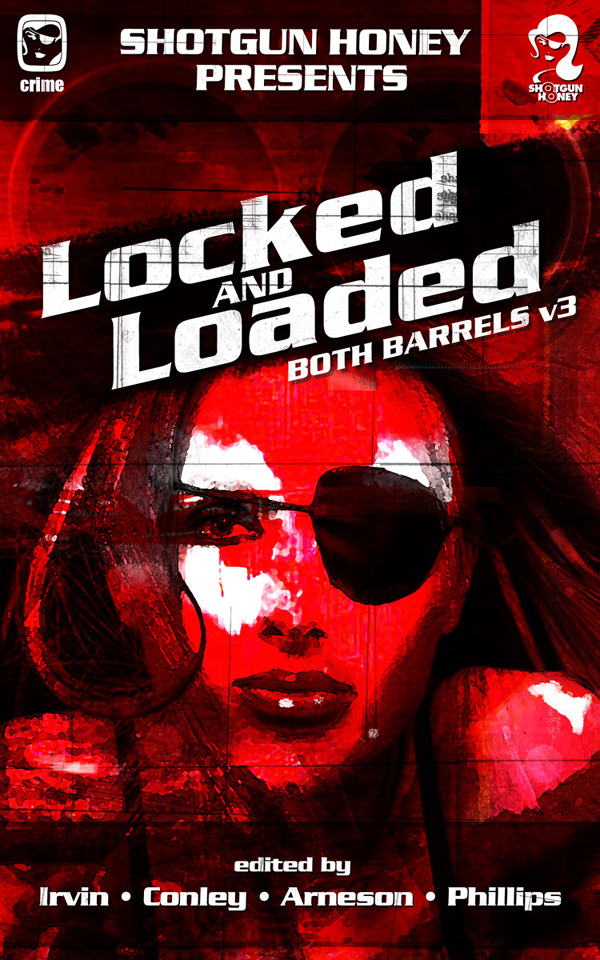
Also from One Eye Press, the cover for Locked and Loaded: Both Barrels Volume 3 has been announced. This new anthology is slated for release on April 21, and will feature my story “Young Turks and Old Wives” among many others. It will be available from the usual suspects.

Shotgun Honey's official mascot (unofficially Frigga from Thriller: A Cruel Pictures AKA They Call Her One Eye AKA Hooker's Revenge) makes a return appearance for the cover of Volume Three.

Shotgun Honey’s official mascot (unofficially Frigga from Thriller: A Cruel Picture AKA They Call Her One Eye AKA Hooker’s Revenge) makes a return appearance for the cover of Volume Three.