That’s A Wrap

2006 has mere hours left to live. You may have noticed I’ve been rushing these last few days to post all the news, updates, and dangling loose ends before the new year begins. We all like a fresh start from time to time, and I wanted to put any old business to rest so I wouldn’t have to think about it in 2007.

I’ve already written the final word on Paddywhacking. But in the interest of being utterly complete, I’ll sign off the year with a collection of leftover images from the project and my time in Dublin that never found a home in any previous blog entry.

All the trendier restaurants name themselves after deceased dictators. Can a Saddam’s be far off?

Some of the Paddywhacking gang and associates do what they do best. Drink wine.

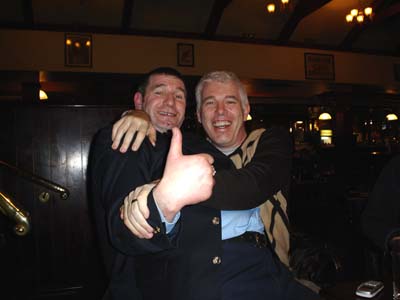
I don’t want to know what he’s thinking about doing with that thumb.

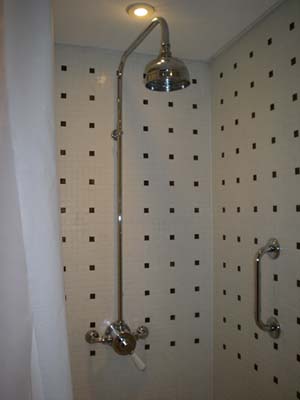
My Irish nemesis. The most powerful hotel shower in the world. I still have bruises.

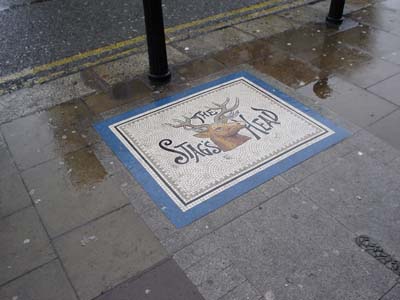
The Stag’s Head. I guess if your pub is old enough, you get to advertise on the pavement.

Pst. It’s this way.

It’s always interesting to drink in a pub that’s a century or two older than my home country.

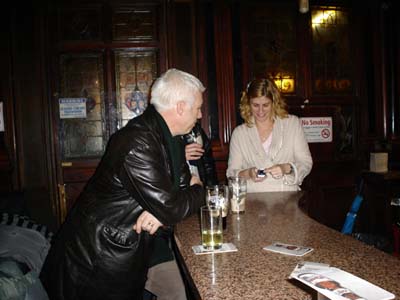
Anna Merritt and I play dueling digital photography inside The Stag’s Head.

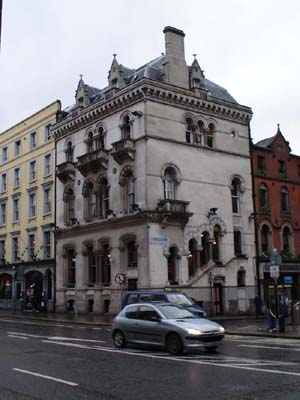
Dublin buildings are just cool looking.

Anna inside the homey Subotica offices. They’re set up in Neil Jordan‘s old flat.

Insomnia coffee and a peat fire announce it’s time to get to work.

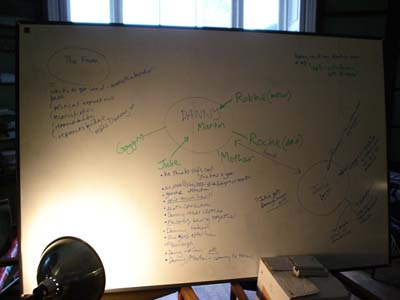
We filled all too many white boards with this sort of story-structure gobbledygook.

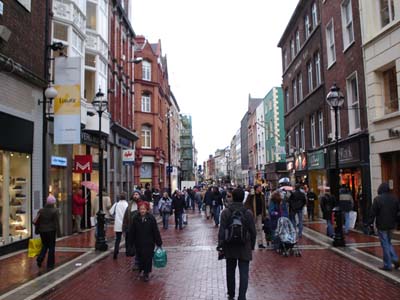
The touristy shops started about ten feet away from the hotel.

A view of The Fitzwilliam hotel from St. Stephen’s Green. Whenever I’m in Dublin (and someone else is paying), I stay at the Fitz.

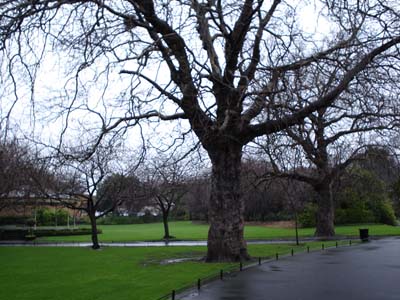
St. Stephen’s Green is full of trees that are very old.

And gnarled.

And textured.

See you in the new year.

An Irish Wake

The question I get asked most frequently (other than “What time is it?” “What would you like to order?” and “Were you born with that?”) is “What’s happening with the Irish thing?”

Paddywhacking. I’ve been calling it Paddywhacking because I’m a smartass and nobody likes the actual working title, The Irish Connection. You know it if you read the blog.

After my return from Ireland last winter, new drafts of episodes one and two were prepared while I waited around to see how they would play into my current drafts of three and four. We were hoping, with the next round of rewrites, to finally get all four hours of the miniseries into linear working order — one we could at last call a real first draft that contained all the characters and story elements and plot lines we wanted to run with. From there it would just be a simple matter of fine tuning the machine through subsequent drafts and then playing it all out in front of the cameras.

By the summer of 2005 I was asked to do some quick additional work on the first half of the story in preparation for my overhaul of the back half. Once that was turned in, we were, by my estimate at least, fourteen days of writing away from the holy grail we’d sought for so long. Roughly two hundred pages of screenplay that held water and all made sense as one huge story. And was maybe even entertaining to boot.

New contracts were drafted, additional fees raised. And then, just as two years of work were about to pay off…nothing.

There’s a term for this phenomenon. Development hell. It’s very common, but knowing that doesn’t cushion the blow much when it happens to you. In my case, this particular trip through Dante’s pre-production inferno came courtesy of shake-ups on the Canadian end of the project. Our broadcaster, the mighty CBC, chose this particular moment in time to play musical chairs with all the executive staff. New people were put in charge and old go projects were suddenly up for re-evaluation. Then the Canadian production company had their own staff switcheroo. The upshot was that some people left, some people stayed, some people were replaced, and some were not. And with all the rethinking going on, our entire project — probably just one of many in the mill that suffered the same fate — stalled. And it stayed stalled.

And then months went by. And then a year. And then something else happened. The final, symbolic nail in the coffin.

Among our various research outings — to Darndale, to the ice bridge, etc. — there had been a meal. This was a special meal, arranged through the grace of some convoluted mob ties. Over the course of a dinner, set to take place in a secluded and expensive Old Montreal restaurant, we were to sit down and pick the brain of a real live Irish gangster. His candid discussion of his line of work was meant to give us the necessary insight to flavour the miniseries script accordingly.

Mister X, as I shall unimaginatively refer to him, arrived after the rest of us were seated. He was dressed in a dark suit, with gold chains and slicked back hair. And he looked like a gangster. Or, at least, he looked like Ray Liotta playing a gangster in a Scorsese film. It’s hard to say if the movies reflect reality or vice versa sometimes.

Introductions were made all around. It was understood that Mister X could not discuss anything that might incriminate himself or the members of his family. This was a reasonable caution on his part, considering one of his brothers was already in jail awaiting trial for one count of murder and two counts of kidnapping. Or was it two murders and one kidnapping? I could never keep that straight. Anyway, we were assured by Mister X that his brother was innocent of all charges. Wink wink.

His anecdotes were often vague, filled with statements like, “Things were said,” “Things were done,” “Some things happened.” We were left to assume that none of these things were very pleasant for those on the receiving end. Although he tiptoed around the specifics, statements like, “The only thing that works better than violence is extreme violence,” didn’t leave a whole lot of ambiguity lying on the table next to the bread rolls.

Some of his stories weren’t always appropriate for dinner conversation, like one about an associate’s miraculous survival after a particularly bloody altercation. “And there were these fucking Cambodians cooking a dog in the bathtub, and they set the building on fire,” he told us, winding down to the punch line. “So the firemen come, and they find him lying there with the knife in his neck. And he’s still alive.”

The details of how the brothers X ran their money-making ventures were outlined for us as a simple business model. Someone looking to start, renovate, or forestall bankruptcy on a small business — say a restaurant or bar — would come to the brothers for a loan no bank would give them. If the brothers liked the look of this business and thought they might care to own it themselves, they coughed up the money. If the borrower was able to pay them back at a huge interest rate, fair enough. If he fell behind and couldn’t make good, the brothers would move in and take over the business.

“He meant ‘take over’ the business,” one producer told me later, pointing his finger and making a trigger-squeezing gesture.

“Yeah,” I replied, “I read between the lines.”

In this way, they ended up “owning” all sorts of joints, high class, low class, and everything in between, all over town. They weren’t the owners on any sort of legal document, but it was clear who was boss. If you don’t mind applying a bit of muscle now and then, this is how you expand, this is how you succeed. This is how you piss off the wrong people.

Fast forward to a few months ago. Our research soirée was becoming a distant memory when an innocent question was dropped during a conversation.

“Did you hear one of the X-brothers got shot?” This in an otherwise mundane discussion of recent local events.

I hadn’t heard a thing. “Really? Which one?”

Our one.

A trip to the recycling bin produced the relevant newspaper articles. The hit came in the middle of the night, outside Mister X’s suburban home. The photo showed a field of police evidence markers numbering all the spent shell casings littered throughout the scene. By all accounts is was a hail of gunfire that made the demise of Sonny Corleone seem like a gentle passing.

Again I read between the lines, this time from newspaper copy. I gleaned the reaction of various X-family members I’d heard about or met, and caught the usual hints reporters like to drop without stepping over nebulous legal boundaries. Cute phrases like, “known to police,” and “a settling of affairs” get sprinkled in just enough to paint a picture without making specific accusations that might invite lawsuits. Who ordered the hit and why remained obscure. A simple, unrevealing obituary ran a couple of days later under a picture of a familiar face. If any heads rolled in the aftermath, the media never connected the dots, and I haven’t heard a peep about the murder or the X family since.

That, for me, was the final demise of the whole Irish show. Many months had passed since the last bit of news about the project, and then this struck like a piece of punctuation at the end of a sentence. A bullet-hole period.

Is it possible the miniseries may rise from the dead and put everyone back to work sometime in the future? Anything can happen. Especially when two public broadcasters and two film companies pour that much time and money into developing a high profile international co-production. But I’m not holding my breath, and neither should you.

So the next time you run into me and want to ask about my work, there’s all sorts of cartoon news I can share. But please, let dead Irishmen lie.

Yet they were of a different kind,
The names that stilled your childish play,
They have gone about the world like wind,
But little time had they to pray
For whom the hangman’s rope was spun,
And what, God help us, could they save?
Romantic Ireland’s dead and gone,
It’s with O’Leary in the grave.

– William Butler Yeats

Darndale

The last time I went to Ireland to work on Paddywhacking, I said I wouldn’t write another blow-by-blow, day-by-day description of what went down. But I did say that I would offer up at least one interesting story about my travels. This one is overdue.

Darndale is the name of a district at the north end of Dublin. Had the series of low-rent apartments that compose much of the layout of the place been built in North America, someone would have dubbed them “the projects.” Over the course of several drafts, the setting of half of our television miniseries had been relocated from an Irish border town to the general Dublin area and Darndale specifically. In an effort to bring everyone (particularly the Canadian faction of the team) up to speed on what the Darndale experience was all about, a nighttime infiltration was planned. “Safari” would also be an appropriate term.

Co-writing the miniseries with me was Declan Croghan, London-based but Dublin-born. He arranged for us to be picked up by a trustworthy guide — one of his brothers as it turned out. The brother arrived in a four-wheel drive that looked like something the military might issue. It may have seemed a touch extreme for a simple city tour, but as we made the long dark trek north to the increasingly shitty end of town, a full-blown tank started to seem like a more desirable tour bus.

I’m sure it’s at least three hundred percent more charming by the light of day, but by night Darndale seemed like a vaguely apocalyptic urban jungle. A good place to get murdered if you dared look like you didn’t belong. The design of all the low-rent housing in the neighbourhood increased the overall peril of the place. It must have seemed like a good idea at the time, laid out on some architect’s blueprints, but in practice it was sheer folly. None of the apartment complexes had doors leading out to the street. Instead, the entrances all pointed inward to courtyards that were only accessible by foot. The blocks themselves were arranged in a jigsaw-puzzle pattern that was meant to be quaint, but served as an impenetrable maze of zigzagging streets. The end result was an entire district the police were too frightened to enter. If the architects of Darndale had set out to design a tiger trap for squad cars, they couldn’t have done better. Chasing suspects into this morass was a fool’s errand at best, and a life-endangering ambush at worst. To catch anyone in Darndale, officers would have to leave the safety of their cars for an inevitable foot chase through enclosed courtyards and dark corners. That is, if their cars ever even made it to the scene. We were told of the destruction of many police vehicles that had dared penetrate the neighbourhood. A few twists and turns through unfamiliar streets and they’d wind up on some dead end, pelted to pieces by the local juvenile offenders who blocked them in and stoned their cars to death with rocks and chunks of concrete. Officers were forced to abandon their rides and run for their lives, hoping to find some route out by foot.

Turning down one street enclosed by tall towers, we were reminded how much our own ride resembled a police vehicle. As our headlights lit up the pitch black nooks and alleyways of the twisting street, startled junkies fled in all directions. Only moments after we realized what a strung-out hornets nest we’d disturbed, the hornets themselves realized we weren’t any sort of authority they needed to worry about. They immediately started to reclaim their shooting gallery, closing in all around us in a loose meandering formation that had the distinct possibility of turning ugly and/or hostile. Taking no chances, Declan’s brother put the four-wheel drive to good use, gunning the car over the curb for a surprise bit of off-roading that narrowly squeezed us through a cement pillar divider between buildings and back onto the street a block over, safely out of junkie range.

Where people in Darndale bought the necessities of life (other than heroin) was not readily apparent. All the shops we saw were in ruins, like they’d be targeted by a bombing campaign meant to reduce them to rubble so the homeless would have someplace to squat. The only commercial outlet of any kind I saw was operated out the back of a large steel cargo container. I got close enough to take a picture, but not close enough to determine what was for sale. The rest of the party urged me to get back in the car quickly. Stopping was, evidently, a poor idea. And snapping photos was a quick way to get my arse kicked, most likely by the mysterious, unseen shop keeper himself.

Would you buy milk and eggs from this man?

Locally, transportation was in short supply. Owning any car nicer than a complete shitbox seemed pointless. If it wasn’t stolen outright, it was bound to be reduced to shitbox status overnight. As a result, delinquent children were left with slim joyride pickings. Ever inventive, however, they’d come up with a solution to that.

Horses.

Now, keep in mind, this was strictly an urban landscape. Any sort of countryside or farming was miles and miles away. The only green space at all was small patches of lawn around the apartment buildings. Everything else was paved. Nevertheless, horses roamed the neighbourhood freely, grazing where they could, and blocking whatever motorized transportation might happen along. These weren’t the elegant, muscular beasts of the field or racetrack you likely think of when the word “horse” comes up in conversation. These were shaggy, unkempt, wildebeest-looking animals –- the horse equivalent of a filthy homeless schizophrenic living in a cardboard box next to a dumpster. We were told that the local kids would buy cheap horses on auction for a few Euros they cobbled together, and then joyride them bareback around town. By the time the sun went down, they would grow weary of their bare-hoofed toys and would leave them to wander around for days or weeks until animal control picked them up and carted them off. The horses would be fed and tended to and then put up for auction, where the same kids would buy them all over again for another round of joyriding.

Free horse. Help yourself.

Grooming, shoes, and hay could go a long way.

Strictly for research purposes, we went on a pub crawl. Not the kind of pub crawl you go on when you want to get drunk. We needed to keep our wits about us. In fact, the first pub we were shown was deemed too dangerous to even enter.

“Oh, they put windows in,” Declan and his brother marveled when they saw the place for the first time in years. The toughest pub in Darndale used to be a concrete bunker with only one way in or out. Fights would start up inside, and woe be to anyone who didn’t want to participate. There was no escape except to be bludgeoned to unconsciousness quickly. If you were lucky, you wouldn’t be trampled to death in the ensuing melee. Times had changed, however, and now there were plenty of windows cut along the side to allow for all sorts of defenestration action whenever one mate refused to take back what he said about another mate’s mother.

New windows, same broken teeth.

Pub number two was rather more interesting. Declan’s brother had called ahead a couple of hours earlier for special permission to enter and bring some film industry friends who were sightseeing. It wasn’t that this was an exclusive club with an annual fee and a members-only jacket. By all indications, it was open to the public at large. But if you dared cross its threshold and they didn’t know who you were, you were in for a very unwelcome time indeed. This was a Sinn Fein pub, and its location alone insured there weren’t going to be any casual walk-ins from the street. Tucked behind a cemetery, a quarter mile down a long, deserted, tombstone-lined road, you had to make a serious commitment to even get there. And if they didn’t like the look of you once you got there, well…there was all sorts of real estate right next door that wouldn’t mind an extra body or two.

Inside we were greeted by our contact, the man who was going out on a limb to vouch for us. And he was the largest, scariest man I’ve ever seen in my life. He had a face that looked like it had stopped innumerable bare-knuckled punches without blinking. He had a belly on him that could have been employed to crush all the air out of you if he simply turned too quickly. And he had hands that were like shaking a pair of boxing gloves when he offered them to you in a friendly gesture that sent a paralytic chill down your spine. Put simply, he looked like he could and would pull your head off with his bare hands and peel it like a grape — just so he could drink a flagon of mead out of your skull.

Thankfully, we had brought Kryptonite with us. As menacing as he was, this goliath, obese, head-cracking, superman was like a mewling kitten in the face of our tour group. That’s because we had women with us. His one weakness. Around the female of the species (assuming he was, indeed, human) he was shy and awkward. It proves, I suppose, that no matter how much ass you kick, some of us are forever trapped in public school mode when it comes to mating rituals.

They say the only real Guinness is Dublin-brewed Guinness. Something to do with the local water, supposedly. Beer connoisseurs look down on the North American stuff as an inferior imitation. The joke is that you need genuine River Liffey water to brew a proper Guinness. At least I hope it’s a joke. I’ve seen the Liffey. Drinking it would be suicide. In fact, on my last day in Dublin, they pulled a body out of the Liffey. If drowning in the water hadn’t killed her, swallowing some of it would have done the deed just as quick. Personally, I can’t say I’ve noticed a hell of a lot of difference between Guinness on tap here and on tap over there. But for some reason, the Guinness at this Sinn Fein pub was superior to all. I thought it was just me, but I compared notes with the group later and the verdict was the same. I suspect an I.R.A. conspiracy that kept the good stuff for themselves and their own, and let the rest of Ireland drink the discards. I’d prove it to you if I could, but even if I could find this pub again, the welcome mat was only out for that brief moment of time in the winter of 2005.

The third and final pub on the tour was safely on the outskirts of Darndale, in a well-lit, welcoming place where regular civilians could drink and not be murdered for their shoes. There, Declan ran into one of this old associates he hadn’t seen in years. Declan is one of those guys who gets recognized wherever he goes in his old stomping grounds, even by people who haven’t seen him since he was a kid. He’s the quintessential Irishman. Not the Luck Charms variety of Irishman, but the manly Irish Spring variety. He looks like Lee Marvin and James Coburn had a love child, complete with the big picket-fence teeth and prematurely white hair. And, like all Irishmen in classic literature, he has a long history of death and rebirth, managing to get fucked up enough to have been read the last rites two or three times in his life. He’s a force of nature, indestructible.

But it’s still possible to take the piss out of him. Witness the aforementioned lost associate with the unique talent of finding where people’s buttons are and pushing them, just to see how irritating he can be without getting punched. Watching him go to work on Declan and seeing Declan’s resulting foul mood was highly entertaining. An interesting, consistently drunken character, this old pal had spent a long stretch in prison. There he learned a few new special skills. Like, for instance, how to have sex with other men. Now, paroled and free to come and go as he pleases, he maintains his acquired taste for the allure of man-ass. I know this because he took Declan aside to bug him to return the next day without his entourage. He wanted to meet up again, just him, Declan, and myself. It seems he took quite a fancy to my boyish charms and thought romance might be in the air. I can’t help but wonder what might have happened had he not just spent the last half hour tweaking Declan’s bollocks for a laugh. Declan might well have tossed me to him for old time’s sake. You never know. One minute you’re on a research trip, the next you’re in the public toilets trying to convince a hardened (and hard) ex-con and his shiv that you’re quite flattered by all the attention, but you really don’t swing that way. Thanks just the same.
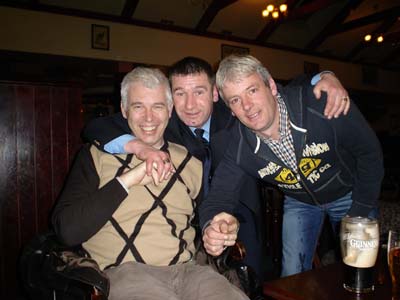
Declan left, his brother right, my not-so-secret admirer centre. Wet pants courtesy my spilled Guinness.

The ride home was a thoughtful one. I’d seen a lot, and already the wheels were turning, deciding how some of this local colour could be worked into the scripts. The shaggy mongrel horses had to make a cameo, as did the police cruiser ambush technique and the pub behind the cemetery. So much of this material was gold for our project, it would breathe new life into the next draft. There was plenty of fresh hope and enthusiasm for our little four-hour tale of Irish mobsters in Montreal and Dublin, and all the intrigue and drama and violence and pitch black humour that was to go with it. The future seemed very bright.

Oh, how things change.

Longshotini Italiano

The contracts have been signed, so it’s fair game to announce that another foreign translation of Longshot Comics: The Long and Unlearned Life of Roland Gethers is scheduled for publication sometime in 2007.

The German edition won awards and accolades several years ago and remains listed on Amazon.de. A Spanish translation was also in the works around the same time, but that one petered out before the deal was finalized with the publishing house that pitched the project to me.

Now we have an Italian edition in the works that will follow the square-bound design of the German edition fairly closely. This marks the first time I’ve signed a contract that specifically lists Vatican City as one of the territories covered by the terms to the agreement. I’ll keep you posted as we get closer to a print date and we have a brand new version of my epic graphic dot-novel that you can share with all your friends in your local Little Italy.

On an unrelated note, astute web heads may have noticed that my battered and beleaguered forum page is down. Down for the count, in fact. Mercilessly bombarded by spammers, there seems to be no point keeping it afloat. Any and all worthwhile information contained on those pages will eventually be salvaged and moved to a more permanent, unassailable section of the website. There are a number of other fixes and additions planned for the new year, including some never-seen-before content from deep in the Eyestrain archives. Stay tuned.

For those of you who still feel the need to post something to the site, the blog comment feature remains ready, willing and able. The spammer shock troops still haven’t figured a way around the new security options there. Yet.

Fat American Children

Work continues on more episodes of both Ricky Sprocket and Pucca. Comparing and contrasting the two projects, it becomes clear how often the geographic location of the broadcasters has an effect on the content of the shows they run. Both offer plenty of notes at each stage of production, but there can be a distinct difference between American notes and British notes. Even when it comes to something as basic as food.

On the one hand we have Nickelodeon, a broadcaster so preoccupied with not being culpable in the fat assening of America’s youth, they’ve asked that any reference to unhealthy food be removed from scripts. In one instance, for example, they requested that characters visiting an ice-cream shop go to a juice bar instead. Since Americans seem hell bent of doubling their size every generation, all venues of children’s entertainment have become worried about a theoretical class action suit on the horizon that might focus blame on them for childhood obesity. It’s therefore become passé to suggest chocolate tastes good, popsicles are refreshing on a summer afternoon, or that toast really begs to be buttered.

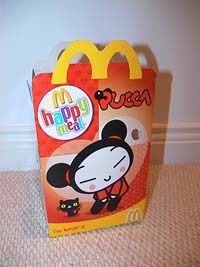
Then we have Pucca being broadcast all over Europe and shilling for McDonalds at the same time. “Be full of energy just like me and run around for an hour a day,” Pucca tells us via word balloon on the back of her very own Happy Meal box. Forget for a moment that Pucca doesn’t actually have shit to say in her cartoons. I’m still trying to figure out if the message is burgers and fries give you energy to run around, or that you need to run around to burn off those burgers and fries. As long as no one is shown receiving a head butt or some similar culturally taboo injury, the Brits will stand by and let their cartoon characters endorse greasy gluttony. I suppose with all the mangled, crooked teeth English DNA has imposed on generations of kids, the parents are grateful if their children can successfully chew and swallow anything to keep them alive.

Rest assured, by the way, that I’m not one of those superior North American pricks who likes taking cheap shots at bad British teeth. Being the product of too much English DNA myself, I felt the genetic curse of dental deformity throughout my childhood. Only thousands of dollars of oral engineering and years of excruciating tooth-torture made my mouth presentable enough for me to leave the house without a sack over my head.

Not that I ever leave the house these days. I’m too busy writing cartoons – with or without officially sanctioned foodstuff contained therein.