Real Canadians Hate Summer

Thank my pathological need to publish at least one update a month for this sad little entry on the last day of June. Although I have a list of topics I’d like to discuss in great and tedious detail, I simply haven’t had the time or the will power to get to it. Such content will have to wait for the blistering month of July, when all that sun and heat will burn away my energy and leave me sitting in a darkened room in my underwear, sweating and cursing the entire summer season, as I stare blankly at my computer screen, hoping something more interesting than internet depravity will magically appear. Only then will sheer boredom force my hands to start typing up all those blog entries this dreadfully blog-deprived world has been yearning for.

Until that moment comes, there is one update to the site worth checking out. Ten new Movies in Longshot have been added to the marquee for the first time in damn near forever. Technically, they’ve been up for several weeks, but it took about that long to work some of the kinks out of the new material. It’s been so long since any Longshot strips have been posted here, the technical details of how exactly that was to be accomplished proved elusive.

Thank You For Not Choking Me To Death

Long after so many other civilized corners of the world clued in, Quebec has finally decided to join the party and ban smoking in all restaurants and bars. Despite this trend becoming more and more popular across the globe, it’s a major breakthrough I thought I’d never see happen here. Quebecers are hopelessly addicted to tobacco, and asking them to lay off the ciggies over a beer or a coffee is a pill about a thousand times harder to swallow than gay marriage, a prime minister from out west, or the fact that Celine Dion is an insufferable shrill skeleton. They just love to smoke as no other culture on Earth.

Witness one woman I saw only hours before the smoking ban was due to take effect. She was sitting on a bus-stop bench, an arm adorned by a huge hepatitis-chic tattoo, a smouldering cigarette hanging out of her mouth, and a belly full of nine-month-old fetus. Just try suggesting she should quit. She’d claw your eyeballs out. When I, with no particular affinity for children, see someone like that, I still think, “Hi. Could I adopt your child once it’s born so you don’t get to fuck it up?” If I actually said it out loud as often as it occurs to me, though, I’d probably end up with more adopted kids than Angelina Jolie and Mia Farrow combined.

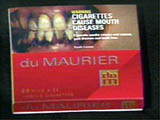
It’s not like you can warn the typical Quebecer off the stuff, either. They laugh in the face of mortal peril. Then they start coughing and hack up half a cup of tar, but they’re still giggling once they’re done. Even the particularly vile Surgeon General labels they started covering cigarette packaging with failed to put anyone off. Pornographic pictures of gum disease, heart disease and lung disease didn’t slow down sales, it boosted them.

Last month my local corner store guy complained to me at length about one interminable transaction he had to go through before it was my turn at the cash. The guy in front of me wasn’t just buying cigarettes, he was filling out a collection. He made the cashier rifle through every single pack of his favourite brand of smokes looking for the one particular tumor he was still missing. No luck that time, but I’m sure he was happy to smoke a few more crates of coffin nails looking for it.

Bar and restaurant owners have launched an appeal of the new law, convinced it’s going to drive customers away. I, on the other hand, know a few establishments I’ll be frequenting much more often now that I can enjoy a meal or a drink without tasting someone else’s fumes. Taking a walk on the sidewalk outside, however, will be like strolling through the smoking lounge of a tobacconist convention.

Life Lesson 4: A Poisonous Work Environment

My fourth job paid ten dollars an hour and I thought I’d hit the jackpot. Tired of watching me being exploited for a pittance, my aunt stepped in with a healthy dose of nepotism and landed me a three-month summer job at the same company she worked for. This arrangement, she assured me, would be perfect because she could pick me up on her way to the office and we could drive to work together. The fact that I would be working for a company that was listed as one of the top environmental polluters in Canada held no ethical quandary for me. I mean, come on, it was ten dollars an hour.

On one of our first commutes, my aunt asked me what I wanted to do for a living. Maybe she was wondering if I was interested in a permanent position at the company once I was out of school.

I said I wanted to be a writer.

“When do you get to retire doing that?” she wanted to know.

“Hopefully never,” is what I told her.

My aunt had a first-floor office at the front of the building where she was in sales. I, however, was tucked away in a room upstairs with five other employees who worked as a team to keep the paperwork moving. I was answerable to all of them, and was assigned the little irritating jobs they didn’t want to do themselves. As such, I was required to fill in reports and make calculations. About what, I had absolutely no idea, but my figures seemed to be correct and none of them ever came back to me, so I assumed I was doing a good job.

There were no windows in the office, just fluorescent tubes and a skylight at the very top of a funnel. You had to stand directly under the funnel and look up, way up, to catch a glimpse of the sky. But since this was right in the middle of the room, well away from everyone’s work station, there was never any reasonable excuse to do this.

Everything in the room was grey. The walls, the furniture, the people. If something that wasn’t grey was brought into the room, the lighting would suck the colour out of it. When it left again, it left grey.

All day, every day, the radio in the office was tuned to the local EZ-listening station. All day, every day, I’d wait for them to play one of the two songs in their schedule I could stomach. One was Enya, another was Sinead O’Conner. And when they were on, for two minutes at a time, I could be in that room and not want to tear my eyes out and jam meat skewers through my eardrums.

There was also a door in the office. It was at the back of the room, thick, heavy and very very grey. At random intervals during the day, I would be handed a single piece of paper and told to go through that door.

Behind the door was the factory floor. Iron stairs ran down into its black heart. There was a railing to hold onto, but you couldn’t touch it because it was coated in oily soot. Everything that wasn’t constantly on the move in there was coated in this soot that was sticky in a way unlike any other sticky thing I’d ever touched in my life.

Because I was required to step inside the factory ever so briefly from time to time, I was issued a pair of safety shoes with steel toes that would assure, no matter how badly I was maimed by the heavy machinery, my toes at least would be safe and secure.

There were robots in the factory — automated platforms with roller surfaces that transported stacks of product up and down the line so different procedures could done to them, often involving chemical sprays. These robots all had signs on them warning, “Danger, may move at any time.” To get to the command centre to deliver my piece of paper, I would have to climb over the robots as they went about their duties. Sometimes they would move while I was on them, sometimes they wouldn’t. Each time I ran this gauntlet, there was a calculated risk that something would move at exactly the wrong moment and take my entire foot off at the ankle.

I counted the days like an inmate counts a prison sentence. To pass the time, I drew an elaborate schedule that broke my three months of employment down to hundreds of fifteen-minute intervals. As each of these intervals passed, I would colour them in with a pencil, looking forward to the day when the entire schedule would be filled. Often I would spend an entire fifteen-minute interval doing nothing but waiting to black it out.

We all had our own ways of getting through the day, I suppose. One of the women in the office, for example, got by on the delusion that she was an object of desire. She looked like an aging barroom skank who went and got a real job the day she realized she was now too old and ugly to get free drinks and quick cash for bathroom blowjobs.

“I know you guys all fantasize about me,” she let slip one day, offering me an unexpected and unwanted glimpse of her psyche. The saddest part of her declaration was that she was probably right when it came to the other two guys we worked with.

Weekends flew by like they were nothing. I’d blink and miss them. On my downtime, I wanted to do nothing but sleep or watch television. Creatively, I dried up.

Eventually, I penciled out nearly all of my schedule. For the first time ever, I looked forward to work. My final week was approaching and I anticipated blotting out the last handful of fifteen minute blocks like a kid anticipates Christmas. I simply couldn’t wait.

That weekend I fell ill. Terribly, weirdly ill. I wasn’t coughing or sneezing, I wasn’t sore or vomiting. But all at once, every last ounce of energy I had left me. I could barely make the trip from the couch to the bed, and the concept of food was alien to me. Even if I could muster the strength to chew, there was no appeal in swallowing.

At work on Monday, my aunt went upstairs to my office, collected my things, and told everyone I would not be returning.

They ran the usual bunch of tests at the hospital and came up empty. The doctors resorted to that great cover-your-ass fallback diagnosis and told me I probably had a viral infection. Go home, they said, get plenty of rest and fluids.

I spent the next three weeks on a couch staring at game shows and soap operas. I didn’t move, I didn’t eat, and my weight plummeted. I figured I might die, but I was so exhausted I didn’t much care. Obviously I wasn’t cut out for a nine-to-five life. Three months of it had nearly killed me. But was it the hours or where I spent them?

You might wonder what this factory could have been making that was so singularly toxic that it poisoned the world and destroyed the health of those who worked there. Anthrax, perhaps? Agent Orange? Thermonuclear weapons? No.

They made cardboard boxes.

I recovered in time for the start of the school year. Periodically, I’d hear news about my former co-workers from my aunt. Things like who’d had a miscarriage this time, or who was the latest to develop a malignant tumor. The updates stopped when my aunt retired. She left the job with a tumor of her own. After surgery and chemo, the cancer went into remission for ten years. Then it came back and ate her body in ways so horrific, even someone with my sense of humour can’t make light of it. I remember my mother coming home after seeing what parts of her body the doctors had cut away.

“I didn’t know you could do that to a person,” she said. And she was very pale when she said it.

That was the last of three summer jobs I took to put myself through university. Once I earned my degree, I had to make a choice about how I was going to make a living now. I weighed my past experiences and considered my options. In the end, there was really no choice at all.

I never worked another day in my life. I became a writer instead.

And I learned my final lesson. All jobs suck. Don’t have one.

Life Lesson 3: File It Under “P” for Pimped

The next year I decided to skip the index-card and classified-ad route. Instead, I went to a job-placement agency. They knew where all the good jobs were hiding, and for a small cut of my salary they would hook me up with something that fit my skills.

That’s how I ended up as a file clerk in a gothic cathedral of a bank in Old Montreal. Built when the city was still young, the bank was a classic monument to the riches of the British Empire back when it was still a real empire. Architecturally it was beautiful to look at. Unfortunately, I never got to look at it on the job because I was stuffed inside the world’s smallest, densest file room.

Once again, a kid with no references or experience was thrust into a situation that offered unlimited access to sensitive financial information. But this time it was on a scale so vast, I couldn’t even consider all the fraud possibilities. Here was an unsupervised room, with just a few underpaid workers, that contained the financial records for every major Canadian corporation you could think of. I could have rooted through the most intimate details of all their dealings with the bank if I so wished. I didn’t, however, because it all looked so damn boring.

The thing about this bank was that their filing system was a complete mess. Most of it hadn’t been computerized yet, because the idea of trying to put all that old data on disc must have made the building of the pyramids seem like a diverting engineering whim. Instead, what they were going to do was overhaul the filing system. New folders were brought in by the truckload, and with them, colourful alphabetizing labels. The suit-and-tie peons would be required to sign files out instead of coming in randomly, taking what they wanted, and screwing up the system.

The filing room was hot as a furnace, and the only air circulation came from a giant fan that roared like the engine of a Cessna and cooled exactly one square foot of floor space. If you weren’t standing in that exact sweet spot, you were screwed. To remedy this situation, I took to the filing overhaul project with gusto. Whenever there was a free moment, I would grab an armful of files and disappear into one of the available boardrooms to make new folders and labels. And I got to do this with a charming co-worker from the Maritimes who already had a boyfriend I was hoping she’d split up with in a timely fashion.

In the board room, we would chit-chat about music and pop culture and the incredibly high auto-fatality statistics in the Maritime provinces. We would also gossip about the third file-room clerk who we both disliked. This clerk was a weird chick, considerably older than us, who held multiple jobs. By day she was a bank file clerk, but by night she was one of those creepy people who wander into restaurants and bug customers to buy flowers from them. With her various jobs keeping her busy at all hours, the only time she had to sleep was at her bank job. She would sneak off to the basement where all the old files in deep storage were kept, and sleep for hours in a nest she had made for herself among the boxes in the back, away from prying eyes. All of her duties would fall on our shoulders for the duration, and we resented her for it.

But there was one duty our sleepy co-worker wouldn’t trust us with. The photocopy machine was her domain alone. As far as she was concerned, no one else was qualified to operate it. In a brilliant twist of irony, it was the photocopy machine that precipitated her downfall. She was so determined to man it alone, she was discovered sleeping face-down on it one day. Within the hour we were informed that she was no longer an employee of the bank. A number of euphemisms were bandied about, but we finally made the middle-management executioner admit she’d be fired. It was music to our ears. We liked her replacement much better, even though there were serious communication issues.

The replacement clerk only spoke French and we only spoke English. Charming girl was unilingual because she grew up in the Maritimes. I was unilingual because I’m a bit of a fucking imbecile and never really learned to speak the language despite five years of French immersion and a bilingual certificate that claims, quite falsely, that I can. Nevertheless we managed to train her in the intricacies of the file room through a series of ape-like gestures and primitive sign language. We told her nothing of the filing system overhaul. We kept that perk for ourselves.

Progress with the overhaul was slow but steady, and I could see it really making a difference in the file room. It gave me a sense of accomplishment that had been lacking in my previous job. Slowly, the newer files were becoming a visible presence in the system. Things were easier to find. I firmly believed that by the end of the summer, I could have the entire Mount Everest of paperwork whipped into shape and arranged in an orderly fashion.

I was so pleased with my accomplishment, it didn’t even bother me that much when I found out my co-workers were getting eight dollars an hour compared to my five-fifty. My placement agency had been quietly siphoning off two dollars and fifty cents an hour from my paycheck without me realizing it. I’d known they were collecting a certain percentage, but not a pimp-daddy amount.

With great chagrin, I learned a few days later that my favourite co-worker was leaving the bank. Charming Girl and her accursed interfering boyfriend were moving out of their apartment and would be seeking new jobs in a new town. I would be left with no one to talk to (conversation with the other girl was still at a flea-picking primate level) and no one to date after her protracted high-school romance came to its inevitable end. Once her notice was handed in, I counted the days until her departure with growing sadness. What I didn’t know is that I’d be following her out the door.

With Charming Girl leaving, and our overseer boss increasingly fobbing off her file-system responsibilities, the middle-management executioner was given dominion over the file room. The day he took over, I was called into the boardroom for a private meeting.

The filing-system overhaul project was dead, I was told. From now on, I would be working in the file room and nowhere else. Other parts of the riot act that were read to me involved being stripped of any and all freedoms and responsibilities I had managed to collect for myself. Even my lunch hour, taken whenever I judged things were slow enough to go eat, was to be set at a fixed and inconvenient time that assured the afternoon shift would be long and tedious. Things were going to be very different now that a new master was in charge. This much he made very clear.

He had my letter of resignation, effective immediately, the next morning.

The replacement clerk expressed her great sadness that she was losing both her co-workers on the same day — just not in words, since we wouldn’t have understood. We all knew she was screwed. She was too new and untrained to know how to find much of anything in the file room, and the bank’s ability to function must have been severely compromised the moment we walked out the door for the last time.

We took the train home, Charming Girl and I, said our goodbyes, and never saw each other again. Although she came to mind from time to time for years after, my thoughts about this period of my life tended to dwell on a different aspect of the job entirely…

Boy did that placement agency screw me.

Lesson learned. If someone is going to claim a piece of your salary, make them earn it.

Life Lesson 2: Office Overflow

Tuition for CEGEP was a joke. It amounted to a token sum of money. The books were the only thing that cost real cash, and my parents covered me on that front. University was another deal entirely. That was going to be expensive, and although my parents were insistent I get a degree, I was stuck paying the shot. That could only mean one thing: summer jobs. The years of relaxing, fun-filled summer vacations were at an end. Now I had to spend those months of freedom working to stay in school.

Getting a job proved to be a whirlwind of index cards on help-wanted boards and lots of tiny classified ads. If you’ve ever gone that route looking for a job, you’ll know that the world’s economy seems to be based entirely on dishwashers.

I eventually found something promising on a board at school. It was for an office overflow job at a medical-book publisher downtown. “Office overflow” amounted to anything and everything the regular staff couldn’t fit into their day. That included filling book orders, changing light bulbs, and churning out a million billion photocopies. For five dollars an hour, three days a week.

What astonished me about the job was that I was some kid off the street with no references or experience to offer, yet I was put in a position of trust that supplied me with countless credit-card numbers from people all over North America who were trying to order healthcare books through the mail. Had I been a little more dishonest, there was a fortune in fraud to be made.

Instead I contented myself with liberating office supplies that could assist me in my early small-press ventures. File folders, labels and staple removers were mine for the taking. And with a postage machine at my disposal, I never bought a single stamp while I worked there. I applied my burgeoning creativity to coming up with all sorts of names for fictional recipients of promotional material to cover my own postage expenses whenever I cooked the books. In all, I must have scammed them out of six, maybe seven dollars. I was a criminal mastermind.

My masterstroke came when I was instructed to throw away several boxes of unwanted literature the bosses had accumulated in their offices. Instead, I flagrantly disobeyed and stashed the pile in an obscure corner of the office. On my lunch hours, I would hit various used book stores in the neighbourhood and sell them for spare change. Even the used book stores didn’t want anything to do with most of them, but I managed to unload a few. Maybe as much as four dollars’ worth.

I wasn’t fired so much as cut back until my job no longer existed. I went from three days, to two, to one, to nothing over the course of my final month there. Once the school year started, I realized I’d never been paid my 4% vacation fee that all employers are required to cough up for services rendered. I wrote a letter asking when this would be forthcoming. The letter was passed on to the accountant, who was cooking the books on a much higher heat setting than I ever could. Her letter back informed me that I had been listed as a supplier, not an employee, and therefore no additional monies were owed. She hoped, she concluded, that this cleared up the matter for me.

I let it drop after that and never saw my 4%. I may have screwed them, but they screwed me so much harder. The lesson?

Know what’s coming to you, and make sure you get it.

Life Lesson 1: The Great Wall Of China

The first paying job I ever had was when my orthodontist asked if I might like to paint his fence for a hundred and fifty bucks. His office was located in an apartment building along a busy suburban avenue. The entire ground floor was occupied by commercial businesses, mostly medical in nature. As a co-owner of the property, he was responsible for the upkeep of the building and the land it sat on.

Behind the building, separating it from the next piece of land, was a long wooden fence towering seven feet tall and stretching to what seemed like infinity, but was probably more like two hundred feet. It was green. Mostly green. The old paint job was peeling badly, and much of the wood, weathered grey by years of rain and snow, was exposed. Excited by the princely sum offered, I agreed to slap on a new coat of paint that would freshen up the fence with a much more vibrant shade of green.

I arrived for work the next day and, within ten minutes, realized I had been screwed. The job, I learned, wasn’t just about brushes and paint. Before I could even begin, I had to strip the old flaking paint off with a belt sander. The process was slow and tedious, and it wasn’t made any easier by the fact that I was left to operate the belt sander with no instruction or on-the-job training. Worse was the painting itself. The planks of the fence were spread apart evenly, leaving a couple of inches between each of them. All those edges — hundreds of them — had to be painted individually with the brush before I could even think of applying paint to the face of the fence itself.

Three days passed. I would take the bus to work in old clothes in the morning, and return at night, exhausted and covered in flecks of green paint. I was a manual labourer and I looked it.

On day four, my orthodontist came down to have a look. He wasn’t happy with the progress I was making. He didn’t care about my diligent removal of the old green flakes, or my precise, smooth application of fresh paint.

“Like this,” he said, dipping a pole-arm roller into the bucket of paint and coating the next ten feet of fence in a matter of seconds. He didn’t care that there were still loose paint chips on those boards. He didn’t care that the sides of the boards were still the old shade of green. This was the back of the building, and no one was going to see the fence anyway.

“You’re doing a good job if you’re painting a room in a house,” he told me. “This isn’t a house.”

Then he went back inside. Taking the roller, I set out to do it his way. I broke the roller three minutes later and was stuck having to paint the rest of the fence, spaces between the boards included, with a brush. But I did it fast. And maybe I missed a spot or two, and maybe I didn’t get all the old paint off, but it got done by the end of the day.

After I got paid, I had another two sessions with my orthodontist before my teeth were declared sufficiently straight. I made an appointment for a follow-up visit to be paid a year later, but I skipped it and never saw him again.

Once I started going to CEGEP (college in Quebecese) I would pass my old orthodontist’s building every day on the bus. Peaking out from behind it, I could see a section of the fence and I would think, “I made it that colour.” No one else would take any notice because it was just a green fence. But it was MY green fence.

I remember, years later, being disappointed when I saw the old wooden fence had been torn down and replaced with a chain-link. My work was destroyed, the landmark I had added some colour to was sitting in pieces in a trash heap somewhere. But it had left one thing behind. It had left me with a very important life lesson.

Never do a good job when what people really want is a half-assed job.

Hourly Wages

I’ve been writing for television long enough to recognize certain patterns, even though the days of the fixed Fall-premiere schedule are over. New shows, and new seasons of old shows, can start airing at any time now, seemingly with no rhyme or reason. That means their development periods can also be scattered anywhere across the calendar.

Nevertheless, in Canada, where so much development depends on government funding agencies and their schedules, the first quarter of most years tends to be vacation time for me. Everyone waits with great anticipation to see what will be given the green light in late-March, early-April. Then it’s go-time and writers like me start pitching their brains out for all sorts of shows, new or renewed, in an effort to lay claim to as many episodes as we can get our greedy keyboard-callused fingers on.

Long stretches of atrophy punctuated by sudden bursts of demanding, draining (and highly profitable) activity is what fuels this business and keeps people like me coming back for more. I value my downtime as much as my contracts, and I was never able to embrace the idea of working an honest nine-to-fiver and then trying to cram all my fun and recreation into two days out of every seven.

Many people outside of the film and television industry have a hard time wrapping their heads around my career and how it functions. Although they can certainly appreciate (and envy) my ability to spend much of my day in a bathrobe, taking regular video-game breaks, and dropping everything to go watch a movie whenever the mood strikes me, they don’t necessarily understand it.

My family history is composed almost exclusively of sweaty blue collars. The few white collars mixed in with the bunch tend to be more of a light-blue shade. My grandfather set the pace by moving to Canada in 1922 and working himself to death at Dominion Bridge in twenty years flat. He didn’t actually die on the job. He was conscientious enough to wait until his lunch break to snuff it. But I’m sure he would have finished his day and punched out had his body been able to hold on a few more hours.

When I told my family I wanted to be a writer, I might as well have been announcing I wanted to be an astronaut. And, honestly, I think they’d have been better able to grasp the concept of one of the Simmonses blasting into orbit to repair satellites and dig up moon rocks. I find it fascinating to sit them down in front of an episode of some TV show I wrote and watch them watch it. They pay attention throughout the opening credits, right up until my name appears on the screen. Then they lose all interest. It’s like the rest of the show has no connection to me. As long as my name is spelled correctly in the credits and on the cheque, they’re happy. The fact that I invented everything that happens or is said for the next half hour of television is lost on them.

I could try harder to explain it, but honestly, I gave up years ago. If they know I’m working, they’re satisfied. But then there are those first quarters…

“Are you sure you don’t want to get a little something?” is a regular question I have to endure in these periods. The “little something” in question being a regular job. One my family can identify with. Oh, nothing like digging ditches or laying bricks. But a nice, safe, ordinary office job. A job that pays a nice, safe, ordinary salary.

I could explain how it’s hard to go back to that sort of work when now, screenwriting, I can make what I used to make in a week or two in one hour flat — writing zingers for the smart-aleck sitcom character, action scenes for the sugar-fuelled cartoon hero, or gardening-tool sadism for sociopathic gangsters. I could explain, but I expect the same sort of emotional disconnect that happens to them the moment my credit fades from the screen.

I’ve been thinking about my old jobs lately, waiting for my forced vacation to end. There were four of them in total. Four real job-jobs. I can’t say I truly enjoyed a moment of any of them. But each of them had a lesson to teach that still applies, in some fashion, to my career of choice today.

In the coming days, as I begin pitching in earnest for a new year of television programming, you can read a bit about my formative years. Or, at least, the years that formed my current work ethic that keeps me in bed past noon and bathrobe-clad through till suppertime.

Political In-Fighting

The comics industry is a tiny, incestuous little biz. At any given moment it can be riddled with a dozen different tempest-in-a-teapot battles fought in any number of letters pages and editorials. One of the favourite battlegrounds, where dirty laundry is aired, no holds are barred, and grown men fight like teenage girls — all teeth and fingernails — is The Comics Journal.

As the leading magazine about comic books in North America, The Comics Journal has long been published by Fantagraphics which is, itself, a well-known mill for alternative (and sometimes pornographic) comic books. How can a comic book publisher maintain its journalistic objectivity when covering an industry that includes dozens of rival publishers, you ask? Well, that’s easy. It can’t. But a conflict of interest is the least of our worries in a medium that disappears up its own ass more and more as each year passes.

“Blood and Thunder” is what the headline declares, “The Quebecois cartooning scene dukes it out in our pages. Yes, all of them.”

It sounds like hyperbole, but it’s not far off the mark. Late last year, I was asked to sign my name “in support of” a letter to The Comics Journal refuting a recent article about the Quebec comics scene that appeared in their pages. Like so many articles that have run in the Journal over its long history, it smacked of one guy plugging his buddies and ignoring the big picture — the big picture being everyone else in the world who wasn’t his personal friend. I’ve seen this sort of thing many times before in many different publications (The CBJ is hardly alone in this “I’ll scratch your back if you suck my balls” approaching to covering what’s hot and what’s not down at your local comic shop). It didn’t particularly faze me, but it sure got up the nose of the authors of the letter. Being one of the ignored parties, I was among dozens of Montreal artists approached to put my name on what amounted to a petition demanding, “Hey, what about us?”

So I agreed. Not because I felt slighted by the article, angered by its narrow view, or insulted by not being mentioned. I signed because so many other notables had refused to. Why did they refuse? It wasn’t because they didn’t give a shit (which would have been a perfectly valid reason not to participate). It was because they were scared to.

In this aforementioned tiny and incestuous biz, they were worried about saying anything that might burn bridges, sever ties, or otherwise piss off somebody somewhere. And that’s what really irritated the hell out of me. Because, seriously, who cares? It’s comics. The vast majority of people involved in this latest silly tiff are self-publishers anyway. In that sort of situation, you can burn every bridge you cross, run over pet dogs with your economy car, and kick the walkers out from under grandmothers, and it won’t affect you, your business, or your income one iota. When you’re your own boss and nobody is your potential employer (and even if they were, they’d be offering you peanuts anyway) what’s to stop you from speaking your mind? Theoretically nothing. But in practice…

It’s times like this when I’m glad I’ve moved forward to much larger, wider-reaching mediums like film and television. Here, at least, with so much more money and exposure at stake, I have a valid excuse to maintain a cowardly silence about what I really think.

Spambots Declare Jihad On Eyestrain

The forum has been pulled down for the second time this month. Spambots have been targeting it lately, and much as I’d love to turn this entire website into a shameless shill for online gambling, former-communist-block porno, and hot junk-bond investment tips, I’m afraid I must stand firm on one ethical stipulation. Spammers must PAY ME to be their whore. Otherwise I’d just feel cheap.

Measures are being taken to make the forum more secure. And by secure, I mean it will be SLIGHTLY annoying for the spammers to get their text onto the site. The extra ten seconds it will take them to flood every discussion thread will cut deeply into their busy day, and reduce their total spam output by as much as 0.0000000001%. We here at Eyestrain Productions stand proudly at the vanguard of internet security. The dam may have burst, but we’re still plugging holes with our fingers, never fear.

Until the forum is back up, you’ll just have to take my word for it that I’ve updated nearly an entire year’s worth of Movie Night Minutes. No, seriously. I’m not even lying.

Thankfully, I don’t feel alone. I’m not the only cartoonist under siege these days. Remember the good old days of The Satanic Verses, when you had to write A WHOLE BOOK to get a jihad slapped on you? Now you can earn one with a lousy single-panel comic strip.

Although the offending political cartoons first saw print in September, the Muslim world continues to work diligently on a body count that will get the world media to sit up, take notice, and debate whether they should reprint the catalyst strips yet again. Keep putting out those oil fires with gasoline, guys. It’s funnier than anything on the funnies page.

It’s been a long time since this many people died over a comic strip. Millions of Americans continue to drop dead each year by going on the Garfield diet, but cartoon historians will point to more specific examples of attributable fatalities. Spousal-abuse homicides peaked in 1976 during a particularly brutal two-week Andy Capp drinking binge. At least a dozen deaths among young professional women were blamed on the Cathy strip that featured a detailed, but highly hazardous homemade abortion guide. And, of course, there are the three slayings confirmed as being a direct result of the controversial Ziggy “Kill your parents” panel.

Only one conclusion can be drawn from the continuation of violent protests among radical Muslims so many months after the fact. We need some new offensive cartoons. People have been too pissed off for too long over old material. In this spirit, I have come forward and offered the world media outlets publication rights to my greeting card line of the prophet Mohammed in a Santa Claus suit wishing everyone a Happy Hanukkah. I believe this will serve to refocus everyone’s rage in a new and exponentially more violent way, and really light a fire under the Molotov-cocktail and burning-effigy economies.

So far no takers.

Fresh Sushi

There’s news on the Yam Roll front. At least it’s news to me, since I only went looking for some sort of update yesterday. It seems everyone’s favourite cab-driving super-hero piece of sushi now has his own website, complete with demo reel.

The show’s premiere is February 6 at 4:30 pm on the CBC with two episodes (15 minutes each) running back-to-back. When mine will air is a complete unknown at this point. I guess I’ll just have to watch and see like the rest of the world.

Normally, whenever my morbid curiosity allows me, I avoid the AICN talkback. It’s full of puerile, crass, opinionated bullshit from a bunch of sanctimonious film geeks. Seeing as I have plenty of my own puerile and crass bullshit opinions, I don’t need to go looking for more. But sometimes I just can’t look away, especially when there’s a new tidbit about that fourth Indiana Jones movie that’s been in development since before the Earth cooled and the oceans formed. It will never happen, but I’m glad Lucas and Spielberg continue to flog that dead horse because the anti-buzz it generates is so damned amusing.

I’m a sucker for joke Indiana Jones titles that make fun of how old Harrison Ford is and the fact that he hasn’t made a good movie in twenty years. I didn’t read a single word of this talkback‘s content, but the titles made me spit my morning cup of tea all over my keyboard. See if you can guess which one made me lose it for ten minutes straight.