Acceptance

Like pretty much every writer ever, I take a lot of notes. Ideas occur and they must be jotted down before they’re forgotten. I have proper notebooks I’m supposed to use for that sort of thing, but instead I end up writing everything down on scraps of paper. And those scraps of paper pile up.

It’s a delight for me to get rid of some of them – that delicious moment when I incorporate the last tidbit of data or a final fleeting notion into a larger story I’m working on. Then I can feed another one of those damn scraps to the paper shredder and be done with it. One more note off my desk, ten thousand more to go.

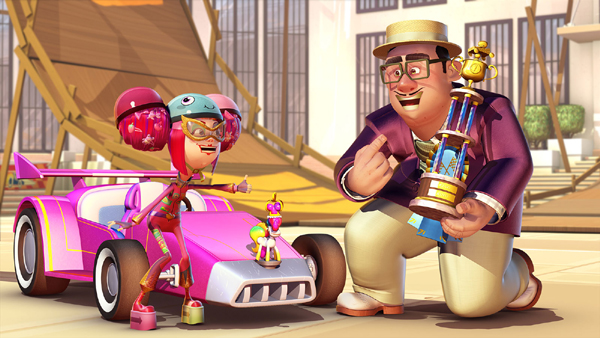
A while back, I found one from 2012 I’d like to get rid of. It’s not the sort of note I can plug into a short story or novel. This one is an unused acceptance speech. Unused because I lost.

At the time, I spoke about my latest nomination for a Writers Guild of Canada Award for my work on Kid vs. Kat. I also predicted the pending loss because I’d won the same award only a few years previously and therefore, as awards often go, it wasn’t my turn to get another one.

Nevertheless, as I stood at the ceremony, pounding pilsners before the open bar closed, I decided to cover my ass and jot down an acceptance speech, just in case. I’m not fond of public speaking, so it’s always a good idea to have something short and cute prepped.

For the record, and in the name of clearing my desk just that tiny bit more, here’s what I would have said in the face of victory.

“When it comes to my scripts for Kid vs. Kat, there’s a very select group I need to thank.

My cats.

I want to thank them for being such superb examples of pure feline evil.

This makes all the claw marks worth it.

I also want to thank my dear wife for driving all the way from Montreal to be my date for tonight.

Oh, and for being such a superb example of pure feline evil. This makes all the claw marks worth it.”

I thank you for indulging me as I file that away and remove it from my to-do list once and for all. The shredder slot yawns open in anticipation.

The Angel of Celebrity Death

Selections for what to watch at my curated Movie Night have always been informed by celebrity deaths. Whenever someone famous kicks off, I like to send them out with a film to show the ignorant masses who they were and what they were famous for. Lately, I’ve been a tad too on the ball when it comes to who’s about to push up a daisy or two.

Three months ago, I anticipated the long-delayed death of Abe Vigoda so close to the event, I went out of my way to grab a screenshot from abevigoda.com less than 24 hours before the site had to finally tick over as to his live vs. dead status.

Well, it’s happened again.

Last Movie Night, a mere 18 hours ago, I forced the class to watch the 1982 Agatha Christie whodunit, Evil Under the Sun. It was directed by the fairly legendary Guy Hamilton. In case you’re not familiar with the name, he’s mostly remembered for being one of the early James Bond directors who helped define the series and turn it into the endless formulaic juggernaut is it today. It endures because it’s a formula that works, but it didn’t come to fruition until the third Bond film (Hamilton’s first), Goldfinger. That was the one that introduced such James Bond staples as: an unrelated opening action sequence, spy cars, Q’s contentious relationship with Bond, the definitive henchman, the definitive non-SPECTRE villain, multi Bond girls who get killed off before he gets to the real leading lady, and, of course, the winning over of a lesbian for the forces of hetrosexuality.

Guy Hamilton, 1922 - The Moment I Thought Too Hard About Him

Guy Hamilton, 1922 – 2016 (The Moment I Thought Too Hard About Him)

Obviously, Hamilton directed a whole bunch of other films. And they include the Hercule Poirot mystery, Evil Under the Sun, which was shot on the island of Majorca. Well, guess who just died on Majorca right after we watched that movie – possibly WHILE we were watching it.

I’ll admit, this is starting to freak me out. It’s like I’ve been imbued with some horrible superpower. I feel I might need to be put down like Tetsuo in Akira before it grows out of control. Already, I’m thinking about which celebrity I should will dead with the eerie force of my brain next. The thought has crossed other sinister minds as well.

“Next week: a Michael Bay film starring Adam Sandler,” is the first official request I’ve received.

And it’s tempting. I’ll kid myself that I’m using my power for good at first, but eventually I’ll start wiping out perfectly innocent celebrities who appear in terrible franchise films to help pay for their latest divorce. And if it comes to that, Hollywood will be a smouldering ruin by the time I’m done.

Tremble before me.

In related news, my dead-celebrity novella, Filmography, is due out soon. Rest assured, I invented a celebrity to kill off in that one. Perhaps I needn’t have bothered. You can’t libel the dead, and anyone still alive won’t stay that way long if I put my mind to it.

Everybody Out of the (Dead)Pool!

I went to see a movie called Deadpool last night. Maybe you’ve heard about it. Despite the title, it’s not about callous assholes predicting celebrity deaths. Imagine, instead, if Bugs Bunny were an insane, mass-murdering, sex-obsessed superhero who knows he’s in a movie and breaks the fourth wall constantly. That’s pretty much it. Plus it’s a Marvel movie that seems intent on bridging multiple studio continuities. And why the hell not? It’s not like they’re paying all that much attention to their own continuities these days. Once you start recasting and throwing around time-travel plots willy-nilly, it all comes crashing down sooner or later.

Ryan Reynolds returns as Deadpool. Yes, returns. You may remember the character from the poorly received X-Men Origins: Wolverine, or the better liked proof-of-concept short that helped sell the studio suits on the idea of producing an R-rated Marvel movie again. The last one attempted was the universally ignored Punisher: War Zone which, because of its pitch-black sense of humour and excessive violence, has since become a cult film in certain circles. Well, Patton Oswalt seems to really like it at any rate.

Being that this was a premiere, we were instructed not to text, Twitter, Facebook or blog about the movie before its actual release date. To which I say: fuck that. What’s the point of freebie advanced screenings if not to generate buzz? Somebody failed their Marketing 101 course.

But this wasn’t the only silly draconian rule we were subjected to.

“No phones!” we were instructed as we entered. “Phones off!”

As the last holdout on Earth who refuses to get a phone, cell or smart, even I thought this was ridiculous. Concerns about piracy abound (though the joys of watching a movie shot from a phone escape me) and phones during a movie are obnoxious, but it was an hour before the screening. Of course people are going to pass the time diddling around with their phones. These demands were flatly ignored, everybody got their texting and browsing done and, for the first screening I can remember in a long time, I didn’t see anybody’s devices on once the film began.

Had I the option, I might have thrown a couple of my own rules into the mix. Ones like: DO NOT READ THE CREDITS ALOUD.

It’s a funny, irreverent movie. So there were funny, irreverent credits at the start. The guy behind me read EVERY – SINGLE – ONE out loud, punctuating each with a hearty laugh. Dude, the audience was full of comic-book geeks. They can all read. We’re happy you’re a big boy now who knows his A-B-Cs, but kindly shut the fuck up.

Here’s another rule for people who apparently don’t know how cinema works: STAY UNTIL THE END.

“Do these people really think there’s not going to be anything after the end credits?” I said as I saw the first hundred people streaming out of the theatre the moment the movie “ended.”

I’ve never understood people who lack the patience to sit through credits – especially in this day and age when half the genre movies include some extra scene at the very end. It’s like they’re at a sporting event and want to beat the departing crowds if the game is a foregone conclusion. I have seen people walk out of a film in the last few minutes BEFORE the credits roll because, I guess, there’s nothing but boring resolution stuff left. INCIDENTAL NOTE:  I remember seeing people do that during Aliens in 1986 when the survivors made it back to the ship. Because, hey, they made it off the planet. It’s all over, right? Idiots.

Anyway, yes, if you see it, there are more jokes during the credits. There are more jokes after the credits. Stick around, or do you really need to feed the parking metre that bad?

Oh right. A review. I guess you want some early-preview critical assessment.

It was okay. I was amused. I laughed a few times. And I wasn’t too creeped out by the cosplayers in the audience. None of them tried to shoot or stab me, which was nice. You can’t always expect that level of civility at the movies these days.

Because of the R-rated content, there wasn’t much studio support for this film. It almost didn’t get made, and when it did, it was for a relatively low budget. By relatively low, I mean for a Hollywood-studio superhero movie. That still means it was shot for more money than the ten most expensive Canadian films ever made combined. So, uh, yeah – go support this tiny little indie film that makes funny at the expense of its own inexpensiveness, because we need to support more ultraviolent mainstream blockbusters.

Anyway, that’s all I have to say.

THE END

Wait! I have one more joke to tell!

What do you call Batman when he skips church? Christian Bale!

See, you would have missed that hunk of gold if you’d already left. Aren’t you so glad you stuck around to the bitter (real) end? Lesson learned.

Inevitable

In one of the most profound tick overs since the date change on January 1st, 2000 and when an extra digit had to be added to the official U.S. debt clock, the websites, abevigoda.com and isabevigodadead.com, have had to change their status. After standing vigil for venerable character actor Abe Vigoda for years, watching over his current state of being so diligently, he has transitioned from a living state to a dead state. He died today at age 94.

But, like Baron von Munchausen, that was only one of his many deaths. Abe Vigoda was first declared dead by People Magazine in 1982. It was just a misprint, but it got the ball rolling. Since then, he has been declared dead more often than any other celebrity. Rumours of his demise, and shock that he was, in fact, still alive, abounded for decades until it became a widespread joke.avevigodaisdead

Vigoda was in on the joke. Although his film and television rolls diminished over the years, he made regular appearances on comedy shows to poke fun at the fact that, yes, he was alive and well, and yes, he was really really old.

I knew about his pending (real) death a few days ago, when I happened to read an update to his Wikipedia page. I was having one of my “How’s Abe doing?” moments and had to check. A member of his family had made a statement on Friday that he was dying – and dying soon.

It’s hard not to feel a certain morbid excitement about the event. I grew up watching Barney Miller, and The Godfather is among my favourite films. Abe Vigoda, with his alarmingly regular pronouncements of death, seemed to thumb his nose at mortality. He was the crown jewel of deadpools everywhere.

I’m fascinated by celebrity deaths – how so many people who know them, but don’t actually know them, come to mourn the loss of these famous strangers. Hell, I wrote an entire book on the subject (coming out later this year, announcement pending) and it’s not out of my system yet. I’ll be writing about this topic again, I know it. Because no matter how many beloved actors and musicians and politicians and artists and writers and reality-show narcissists snuff it, there are always legions more clinging to life.

In related news, Zsa Zsa Gabor is still alive.

Episode VII

I know you’ve all be waiting for me to weigh in with an opinion about the new reboot of a long-standing film series that dates all the way back to the ‘70s. Indeed, it’s had a tremendously long, storied run, lighting up the box office for decades, and remains one of those pop-culture touchstones everybody knows and loves (either overtly or secretly, with some justifiable measure of both pride and shame). Beyond the original beloved trilogy, some of the later entries in the series have been panned with good reason. There was, however, a marked improvement in the last one to come out before the current offering, giving people hope that there might be life left in the old warhorse yet. So the question stands: now that we have a brand new blockbuster that closely mirrors the story and structure of the heralded original film, is it any good? Is it worth moving forward with another two, three or dozen sequels? Can the next generation of characters carry the brand name? Is the magic back?

I am, of course, talking about Creed, the seventh and latest part of the Rocky saga.

What else could I possibly be discussing?

Oh.

That.

Yeah, whatever, I saw that one too. Meh. If you want another opinion, pro or con, the internet is full of them. I don’t care enough to add to the noise.

So I spent bits of December rewatching every single Rocky film. Here’s a spoiler-laden recap of the series. If you haven’t seen any Rocky movies, you might want to give them a look before some idiot blogger blows any surprises for you.

Rocky (1976, Dir: John Avildsen)

The classic best-picture-winning original is grungy in a way that only exists in 1970s cinema. Small-time bum boxer (and leg-breaker for a loan shark) Rocky Balboa leads a pretty shitty life on the poverty-stricken streets of Philadelphia. His fondest wish is for his lowlife buddy, Paulie, to hook him up with Adrian, Paulie’s nerdy sister. But then, because this is America, land of opportunity, the heavyweight champion of the world, Apollo Creed, decides to give a random local boxer a shot at the title in honour of the coming bicentennial celebrations. Rocky gets picked, sight unseen, out of a directory of Philly fighters. What’s meant to be an easy victory for the champ turns into a real fight when Rocky seizes this opportunity to redeem himself after squandering his best years on sleazy matches and petty criminality. He pairs up with ancient boxing-gym owner Mickey and trains hard for the bout. Reality eventually catches up with Rocky, and he confides in Adrian that he knows he can’t win against the champ. His strategy switches to a heroic effort to last all fifteen rounds against the punishing blows of Apollo. Rocky goes the distance and loses to a split decision, knowing what he’s won – self-respect and Adrian’s love – is more important than the championship.

Rocky II (1979, Dir. Sylvester Stallone)

The oft-neglected Rocky II is actually a strong entry in the series that (sort of) remakes the original and changes the ending. Immediately following the events of the first fight, demands for a rematch abound, even though Rocky wants to get out of boxing. He marries Adrian, has a son with her, and lives the high life on the cash and endorsement deals that spring from his sudden fame. But it doesn’t last. The money quickly runs out because Rocky is a dummy who buys a lot of shit he doesn’t need. The endorsements fizzle because Rocky can’t read the cue cards for a simple TV commercial. Accepting the new challenge promises to put Rocky back in the black, but there’s more trouble when Adrian falls into a coma after a difficult birth. With the Apollo rematch pending, Rocky neglects his training to be by her side. When she finally wakes up and instructs him to win, Rocky returns to his training with renewed vigour. The climactic fight is every bit as brutal as the last one, ending in the final round when both men fall to the canvas. Rocky narrowly manages to get to his feet first, winning the title by default.

Rocky II is a unique sequel in that it perfectly understands where Rocky (having gone from the 1976 Best Picture Oscar to viable franchise) stands in the current pop culture lexicon. Everything that was well received in the original is back in spades, with much more emphasis on invigorating training sequences and the epic boxing match (both of which were surprisingly short-changed in the original). There are also many self-aware one-liners and asides that are funny and nicely underplayed – my favourite being when one reporter asks Rocky if he’s suffered any brain damage. “Not that I can see,” Rocky mumbles with genuine sincerity.

Rocky III (1982, Dir: Sylvester Stallone)

After Mickey sets him up with a series of relatively easy victories to defend his new title, Rocky faces a real challenge in the form of young, hungry and mean fighter, Clubber Lang (Mr. T exploding into the public consciousness in his film debut). Mickey tries to protect him from this fierce new opponent but Rocky insists on fighting him in the name of pride. Rocky’s training for the match proves to be a bust when he spends too much time soaking up public adulation and the trappings of fame and fortune. Mickey falls ill the night of the fight after a locker room altercation with Lang, leaving Rocky shaken before entering the ring. Suffering a quick and decisive defeat, Rocky returns backstage only to watch his mentor slip away and die before help can arrive.

Utterly depressed, Rocky wallows in failure until Apollo Creed comes back into his life and offers to train him for a rematch against the villainous Lang. After relocating to the mean streets of L.A., and receiving a head-clearing pep talk from Adrian, Rocky regains his spirit as a hungry street fighter once again and returns to the ring long enough to satisfyingly beat the tar out of Clubber Lang and win back the title.

Following the grittiness of the 70s films, the first Rocky of the 80s suddenly looks very slick. The training and fighting scenes hit a new level of indulgence that goes past satisfying the audience and into pandering territory. But, undeniably, it works. Rocky III stands among the most crowd-pleasing of the franchise, although it’s impossible to ignore that the first hints of genuine stupidity (beyond Rocky’s own dumb-guy persona) are beginning to slip into the series. The scene with Hulk Hogan as Thunderlips is very silly and suffers greatly from its reluctance to admit professional wrestling is all pretend stagecraft – probably for fear of disillusioning many in the gullible target audience.

The original plan was to end the series as a solid trilogy. But this is Hollywood. And a sure moneymaker must always be squeezed dry.

Rocky IV (1985, Dir: Sylvester Stallone)

Russian superman, Ivan Drago, is the latest, greatest athlete created by evil cheating commie science technology. An exhibition match is arranged in Las Vegas to show off his superior boxing ability. Rocky is the proposed adversary, but Apollo Creed is the one to accept the initial challenge and promptly gets beaten to death in the ring. Rocky blames himself for not throwing in the towel and ending the fight earlier. After the obligatory weepy funeral scene, Rocky agrees to fight the Russian champ in Moscow, despite Adrian’s worried insistence, “You can’t win!”

After lots and lots of training footage (Drago in a high-tech gym-lab, Rocky at a remote woodsy cabin for contrast) the two meet in the ring. The dirty reds boo Rocky until the plucky American keeps coming at their inhuman steroid monster despite being knocked down numerous times. Winning over the crowd, Rocky also wins the fight, showing Drago that the “A” in “U.S.A.” is for asskicking. His final warm-hearted cold-war speech assures the Russian people that it’s better to watch two guys killing each other in the ring than twenty million in a nuclear war.

Rocky IV is the shortest Rocky film, which is nice, because it’s also the worst. Utterly stupid from start to finish, it’s still an entertaining piece of Reagan-era propaganda. I’d be much more forgiving of it if it weren’t for Paulie’s robot girlfriend. No, seriously, the disgusting meat-packer slob Paulie gets a robot girlfriend in this one. As if the rest of the film weren’t enough of a terrible comic strip.

Rocky V (1990, Dir: John Avildsen)

Much maligned, Rocky V is panned as the worst of the series. It isn’t. Rocky IV is far worse. Rocky V, weak as it is, benefits enormously from its attempt to return the series to some semblance of reality. After Paulie gives power of attorney to a crooked accountant during their trip to Russia (damn you, Paulie!) the Balboas come back to find their hard-won riches stripped away. With debt and back-taxes piling up, they have to sell the mansion and all their stuff and return to a humble existence in the old neighbourhood of shitsville Philly. After years of head shots, Rocky has suffered too much brain trauma to get certified to fight anymore. He quits boxing and runs Mickey’s old gym as his new career.

Rocky tries to rebuild his relationship with his disappointed son, but gets distracted by an ambitious young fighter named Tommy Gunn who is determined to get Rocky to train him. Under Rocky’s tutelage, Gunn quickly rises in the ranks. A title shot is in the cards, but an obnoxious boxing promotor (obviously based on Don King) seduces Gunn away from Rocky and fast-tracks him to the championship. Although Rocky wishes him well, Gunn remains unhappy when reporters continue to think of him as Rocky’s puppet who only defeated a “paper champ” – the one who inherited the title after Rocky retired undefeated.

At the promotor’s insistence, Tommy Gunn returns to Rocky’s neighbourhood to challenge the aging boxer to a fight. After punching out Paulie, Gunn gets the fight he wants – but it’s a street fight, with no money to be had for the pugilists or the promoter. The two men go at each other bare knuckles, with all the cheap shots you might expect outside of a regulation ring with no referee. Although Rocky ends up flat on the pavement at one point, a hallucination of Mickey encouraging him to go one more round gets him back on his feet long enough to beat Tommy into submission. For good measure, Rocky punches out the corrupt promotor, despite threats of a lawsuit. Rocky, after all, has no money left to be sued for.

Even Stallone hates this film, but the ire is misplaced. It’s nowhere near the quality of the original trilogy, but it’s not a particularly bad movie if you care about the characters and want to keep following their misadventures. More importantly, it’s a first step back towards the Rocky series that had heart, was grounded, and had its brain-damaged head screwed on straight. It was the promise of better things to come.

Rocky Balboa (2006, Dir: Sylvester Stallone)

For years, everyone thought Rocky V was the final nail in the Rocky coffin. Then, seemingly out of nowhere, Sylvester Stallone announced he was working on yet another Rocky movie (this one without a numeral in the title). Rocky Balboa went on to be the most surprising film of 2006. It had every right to be absolutely terrible and turned out to be shockingly good.

Since the previous film, Rocky’s finances have recovered enough for him to buy a small restaurant and name it “Adrian’s” after his late wife. Yes, Adrian has since died of cancer. The fact that Talia Shire doesn’t return as Adrian, the love-interest and heart of the Rocky series, should have been a fatal blow to the franchise. Instead it becomes the film’s greatest strength. Her presence is felt more here than it was in any of the previous few films. Rocky is lost without her, and that fact elevates the story rather than diminishes it. Paulie, of course, persists like the cockroach he is, and remains, for better or worse, in Rocky’s corner.

Running his restaurant day to day, Rocky is living in the past, sharing his old boxing stories with disinterested customers and coming to realize that the world has passed him by. Meanwhile, ESPN runs a computer simulation of how a boxing match between the current champ, Mason Dixon, and Rocky in his prime might turn out. When the computer suggests Rocky would win by knock-out, Dixon’s ego is bruised, and there’s talk of a high-profile exhibition bout. Rocky decides he wants to do it, despite being way over the hill. Training for the fight provides the excuse for him to reconcile with his son, who joins Team Rocky.

What’s supposed to be a just-for-shits-and-giggles bit of theatre with an old man dancing around the ring with a young man gets serious when Dixon discovers Rocky is fighting for real. The body blows are hard, and while the fight never turns into a brutal, bloody grudge match like those of Rocky’s youth, it’s genuine enough for the new champ to learn a thing or two from the old champ. After going the distance one last time, Rocky leaves the ring to the ovation of the crowd, not even waiting for the academic split decision that declares Dixon the winner. One final, sentimental visit to Adrian’s grave and Rocky literally fades away into the background, promising the end of the Rocky series once and for all. Except it wasn’t.

Creed (2015, Dir: Ryan Coogler)

Adonis is another young, hungry fighter, skipping off to box in Mexico, away from prying eyes. Unlike Rocky, he’s smart and affluent, with a high-paying desk job and a new promotion. Despite having every advantage, there’s something in him that wants to fight – needs to fight. Dissatisfied with his life, he quits and moves to Philadelphia, seeking out the legendary boxer, Rocky Balboa.

Looking up Rocky at his restaurant, Adrian’s, Adonis reveals that he’s Apollo Creed’s illegitimate son, and prevails on Rocky’s sentimentality for family and friends. At this point, all the supporting Rocky characters are dead, and even the son has moved away to Vancouver. A combination of loneliness and residual guilt over Apollo’s death leads Rocky to latch on to Adonis and agree to train him.

After his mainstream boxing debut, word gets out that Adonis is Apollo’s son, and suddenly all eyes are focused on Rocky’s new protégé. The current champ, facing forced retirement due to a pending jail term, seeks to set up a last spectacle fight and chooses Adonis as his opponent. The catch is, Adonis is expected to take his father’s name and call himself “Creed” for publicity purposes. At first, Adonis refuses, fixated on making his own name for himself. Eventually, however, he accepts the name as his rightful legacy and agrees to the terms.

While Adonis faces the fight of his life, Rocky faces a fight for his life. Diagnosed with cancer, Rocky refuses treatment after seeing how little good it did for Adrian. Adonis won’t let Rocky off the hook so easily, and encourages him to undergo chemotherapy with the words, “If I fight, you fight.” Rocky continues to train the young fighter, even through debilitating nausea and weakness. With the training and the cancer treatment complete, Rocky and Adonis fly overseas for the big fight. Adonis proves himself in the ring, going the distance just like Rocky once did and, again like his mentor, losing to a split decision. Having won his respect, the champ tells Adonis that he’s the future of their boxing division, and the promise of a Creed II is sealed by the critical acclaim and box office returns.

The Rocky series has been around for most of my life. I saw every one of them in the theatre during their original run (except Rocky V because, like everyone else, I’d stopped giving a shit when that one came out). Criticism that they’re schmaltzy and sentimental is well taken, but they’re proficiently engineered to push all the right buttons and consistently work, even at their lowest ebb. The last two restored my faith in the series going forward even though, each time over the last twenty-five years, I’ve been surprised somebody bothered to make yet another one.

Rocky has been the crown jewel of Stallone’s career. He’s made a lot of very bad movies and he knows it. Despite his need to stretch Rocky thin and relentlessly revisit the character, he’s done so with a degree of respect and tenderness that’s kept the movies from becoming a joke (even though Rocky has been the subject of many jokes ever since the days it won an Oscar over better pictures like Network and Taxi Driver). After desperately wanting him to leave it alone following the note-perfect closing shot of Rocky Balboa, I find myself actively hoping the series will continue in the wake of the success of Creed. It’s not that Creed is fantastic or surprising cinema. But it’s solid cinema – mainstream but low-key, exciting but not overplayed. It’s the sort of honest storytelling that’s willing to show its handsome new leading man, fit and trim, sexy and confident, get the nervous shits before a big fight. I like that. I want to see more of that. It rings truer than, for example, jedi warriors using magic and laser swords to save the universe in a less-engaging, less-grounded, unchallenging and safe Part Seven of a series that refuses to die.

Besides, let’s face it, at this point in history, there are more good Rocky movies than there are good Star Wars movies. That’s a fact. Deal with it.

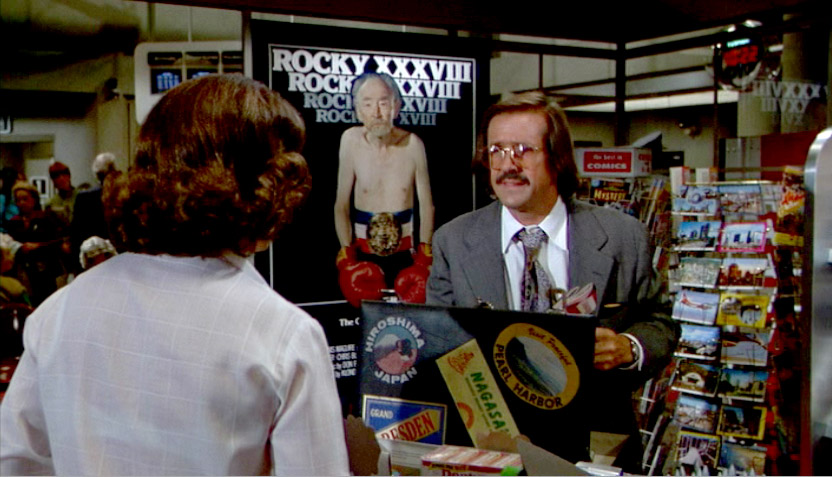
The poster for Rocky 38 from Airplane II: The Sequel. It was a throwaway joke back in 1982, when there were only three Rocky films. Now it doesn’t seem beyond the realm of possibility. Expect James Bond and Star Wars to get there first, though.

The poster for Rocky 38 from Airplane II: The Sequel. It was a throwaway joke back in 1982, when there were only three Rocky films. Now it doesn’t seem beyond the realm of possibility. Expect James Bond and Star Wars to get there first, though.
Nobody’s Role Model

I first saw Raiders of the Lost Ark the day after my 13th birthday. In Quebec the film was rated 14-and-over for violent content, which means I shouldn’t have been allowed in. But the movie gods smiled on me that year and my school ID came back in its laminated plastic tomb badly cropped, with the last digit of my birth date missing. All I had to do (and do often) was lie to the ticket vendor about what that final number was supposed to be and they couldn’t deny me entry to this or any number of other inappropriately violent, gory or sexy films.

Much as I was a James Bond devotee, the adventures of Indiana Jones won me over instantly, and I’ve been along for the ride, through the ups and mostly downs of the series, ever since. To appreciate the Indiana Jones oeuvre, and its various incarnations in books, comics and tv shows, you have to understand two very important things about the character.

1)      He’s a complete prick.

2)      He’s a bad archaeologist.

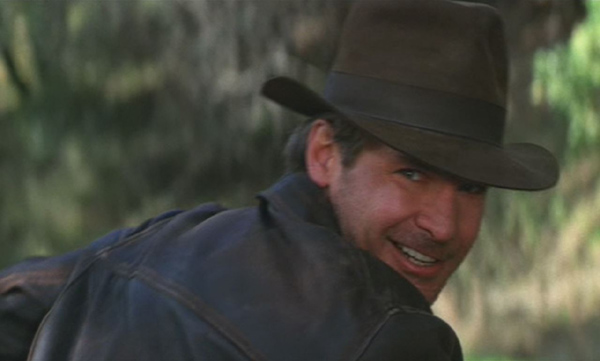
Audiences let him get away with a lot of shit because he’s played by Harrison Ford, who happens to be a big star with a charming smile. But ignore the handsome face and just look at all his character moments, on screen and referenced by others, and you’ll quickly appreciate that he’s an unscrupulous treasure hunter, a mercenary for hire, a grave robber, and often a bit of a sadist. He’s also not very nice to the ladies. It’s why, as follow-up films go, I prefer Temple of Doom in which he openly cops to seeking fortune and glory, to Last Crusade that tries to (literally) paint him as a Boy Scout.

I just brutally murdered someone in the most violent way possible. It's a good day to be me!

I just brutally murdered someone in the most violent way possible. It’s a good day to be me!

The fact that Disney now owns the rights to the franchise and plans to recast and churn out a bunch of new adventures is fine by me. I know some fans are up in arms, but hey, maybe we’ll get another good movie or two out of it. It could happen. You can’t argue that all the Bond films since Connery left the role have been crap. You can’t even argue that all the Bond films starring Connery are great. Or that all the Indy films starring Ford are great. Or good. Or even adequate.

Yes, even the original Raiders of the Lost Ark, undisputed Hollywood classic that it is, has holes in it. The Big Bang Theory fired a major shot across its bow when one character proposed that Indiana Jones has no role in the outcome of his own film – that things would have played out, much as they did, with or without him. Putting aside the argument that the story is really about a guy reconciling with his old girlfriend (his statutory rape victim, in fact) after ruining her life, others have disputed the Big Bang interpretation.

One such recent article points out that Indiana Jones’s story arc in his first cinema outing is one of character rather than action. And I’m sure there are other defending essays to be found by the hundreds out there in the interwebsland.

They’re all wrong, of course. Here’s my version of the story, which is, quite obviously, the correct one.

The idea that Indiana Jones has no major impact on the plot of Raiders of the Lost Ark is ludicrous – that if he weren’t involved in the story at all, the Nazis would have found the Ark, opened it on the island, and been wiped out regardless. It’s a silly premise that ignores the facts. By attempting to thwart the nefarious Nazi plans throughout Raiders, not only did Indiana Jones have significant impact on the events surrounding the Ark of the Covenant, he actually managed to fuck up world history and condemn tens of millions of innocent people to death.

Some hero.

Don’t believe me? Look again. The whole idea of taking the Ark to the island for a sneak preview was Belloq’s, and only happened because Indy’s constant interference prevented the Ark from being shipped out of Egypt in a timely fashion. Until Indy’s penchant for violence and ineptitude blew the whole thing up, the plan was to send the Ark directly to Berlin on the Flying Wing. German high command would have had it safely out of the hands of any and all grubby archaeologists in short order, and Belloq, if he wanted to be present at the opening at all, would have been stuck trying to thumb a ride on the next plane out.

And what would have happened then? The Ark would have been opened, as originally intended, in front of Hitler and the entire senior staff of the Nazi Party, wiping them all off the face of the Earth via God’s wrath, ending their stranglehold on Germany in 1936 and preventing World War II (at least in the European Theatre) from happening at all. The Pacific war might have still been on, but then again, perhaps not. Would Japanese aggression against British holdings in the Pacific have been so bold if England and her navy weren’t occupied by the Blitz and the Battle of the North Atlantic? Yeah, maybe Indy fucked over everybody on that side of the world too, come to think of it.

This can hardly be construed as an isolated incident of Indiana Jones ruining the 20th century for the rest of us. If you take his historic interference in The Young Indiana Jones Chronicles to heart (in which we see our hero incapable of going to his front porch to collect the morning paper without running into five historic figures and shagging one or two of them) then there’s no end of misery and suffering this globetrotting asshole has inflicted on the world.

Regardless of who writes, directs or gets cast for future Indy outings, I look forward to them explaining how Indiana Jones personally crashed the Hindenburg, lost the Viet Nam war for America, and unleashed the AIDS epidemic, all while trying to get his greedy mitts on some antiquarian doohickey because “It belongs in a museum!” rather than the country and culture of origin.

Some hero. My hero.

You Waited Too Long

I haven’t been much use to anybody these last few days. I’m still trying to catch up on my sleep after staying up very late several nights in a row, trying to finish Breaking Bad. Yeah, Breaking Bad, a show that’s been over since 2012. I’d been making my way through the series slowly, successfully avoiding spoilers, but I knew I was pushing my luck. Somebody was bound to spoil something about the plot, especially with the spin-off show, Better Call Saul, now airing and already renewed.

Then I was watching Saturday Night Live last week, the one with Dakota Johnson promoting that newer, crappier version of Nine 1/2 Weeks for the 21st Century. There was one sketch featuring a character’s reaction to the mere mention of Breaking Bad – “No spoilers, I haven’t seen it yet.” At that moment, another character pops into frame and announces, “You waited too long.”

My Spidey sense was already tingling. I had my fingers in my ears, blotting out any residual sound by loudly exclaiming, “BLAH BLAH BLADDY BLAH!” because I knew the next words spoken on my television would be a HUGE spoiler. I dodged that bullet, but I took it as a sign. I had to get Breaking Bad off my plate once and for all, so I overdosed on it. Now I have Heisenberg and Pinkman on the brain and I’m walking around everywhere calling people “bitch” and telling them we need to cook. But at least I’m through it. I know what happens. You can’t spoil it for me anymore.

Which begs the question – which other TV series do I need to get through before somebody opens their big mouth? The Walking Dead is a spoiler time-bomb with every episode, as is Game of Thrones. The only solution there is to remain current. As for other shows that have already run their course, there’s a lot to choose from. Dexter already spoiled itself by ending badly, but I’ve seen that series finale and lived to regret it.

I think my next spoiler-free viewing binge should be Rome. I’ve been meaning to get back to that before it comes up in conversation and somebody in earshot says something stupid and ruins a surprise. Call me crazy, but I already suspect things don’t work out so well for Julius Caesar in the long run. Or Mark Antony either. And yet, somehow, I’m betting that Octavian kid goes on to bigger, better things. Just a hunch.

Considering that one has been off the air since 2007 and all the major plot lines were resolved over 2000 years ago, I really have waited too long.

The Exile Book of New Canadian Noir is now available for order through Amazon (.ca or .com). My story, “Choke the Chicken,” begins on page 116. Get to it before you hear any spoilers like, for example, that it really is about a chicken despite being a noir story. You wouldn’t want some asshole blurting out a thing like that anywhere near you before you’ve had a chance to read it for yourself.

The Usual Suspects

Last week, Montreal thespian Tristan D. Lalla got pulled off a city bus by the cops, surrounded by squad cars, placed in handcuffs, searched and questioned. All this in the middle of a busy street, in front of all sorts of strangers, to his great embarrassment. His crime? He matched a vague description of somebody who had just committed a crime. Our intrepid police force, always on the vanguard of criminology, decided their armed-robbery suspect might be fleeing the scene, one stop at a time, on a bus.

You can read the account of his fun commute here. Spoiler alert: he wasn’t the armed robber they were looking for.

It got me thinking: hey, I got detained by the cops once because I matched the description of a suspect they were looking for. No backup squad cars converged. I wasn’t handcuffed or searched. My questioning consisted of a few polite inquiries as to where I was heading, followed by a computer search of my I.D. to confirm there were no warrants or arrest records. After about twenty minutes of waiting, which I’m sure was mostly a test to see if I’d make a run for it, they decided I wasn’t the guy they were looking for and sent me on my way.

It was a very different experience, worlds apart. I wonder why. Well, here’s a hint: the last time I saw Tristan, he was on stage playing Othello.

That’s right, he got hassled because he’s an actor. You, see they’re considered a much greater potential threat than writers. It’s a good thing Tristan didn’t tell them he performed in some of Ubisoft’s Assassin’s Creed games or he would have gotten the taser.

We simply must stop this shameless profiling of actors by the police. I know they have a reputation for being coked-up sexual deviants who deliver bad dialogue in terrible movies, but they’re not all bad. I swear I’ve met some good ones from time to time, and they’re just like the rest of us. More or less. I wouldn’t want one marrying my daughter, but I’d be cool with them being friends. Maybe not best friends but, you know, friendly.

So please, Montreal cops, cops everywhere, stop this persecution of our acting underclass. The deck is already stacked against them and they have enough to contend with. If it’s not you and your petty prejudices, it’s film and theatre critics. Must they face your bullets as well as their barbs? Thank you.

ADDENDUM: This just in. Tristan was not cuffed and searched because he’s an actor. Huh. Well then why else…

Oh.

Oh dear.

Sigh.

Mike Stamm, director of Ashes to Ashes, has a Kickstarter project going for his short animated film, The Ottoman. I’ve been following this story for years and it looks like the crew just needs that final financial push to bring it home. Fans of Steampunk and mechs smashing each other to bits should take note and check out the production blog and the existing footage.

ottoman

The Face That Launched a Thousand Quips

Did you hear Renée Zellweger just Jennifer Greyed herself out of a career?

The web has been abuzz since she debuted her new face at the ELLE Women in Hollywood Awards on Monday. Questions were posed like, “Who is that?” and “No, seriously, who is that?” and “Won’t somebody please tell me who this woman we’re taking pictures of is?”

Like the infamous nose job that “fixed” Jennifer Grey’s schnoz and abruptly ended her rising career because she no longer looked like Jennifer Grey, Zellwegger has taken the slice/dice/nip/tuck that extra step and now looks like someone who has just been processed by the witness-protection program.

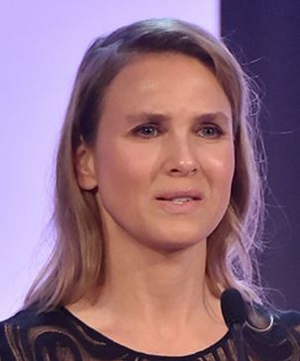
Who are you and what have you done with Renée Zellweger?

Who are you and what have you done with Renée Zellweger?

Such snide comments have led to the inevitable backlash. How dare anyone criticise her choices as she attempts to remain young and vibrant in an industry that rarely has anything to do with women past the age of 40? Well, sorry folks, but the quest for eternal youth in sexist Hollywood isn’t the issue here. The issue is that Zellweger, in an effort to remain marketable, has laid waste to the single most marketable thing about her: that she LOOKED like Renée Zellweger, an established actress from many hit movies.

Famous men and women both have had lots of work done over the last century of cinema’s vain train. Some work has been subtle, some not, some successful, some disastrous. But unless they were addicted to plastic surgery like Michael Jackson, they usually came out looking like new, improved models of themselves, albeit with much tighter and frequently expressionless faces. I don’t care for it myself, but lots of stars say it’s essential. Considering it’s elective surgery that’s actually tax deductible as a business express, it would seem even the IRS agrees with its usefulness for maintaining a successful career. You know, like all the prescription meds stars take as well. But, just like prescription meds, if you do too much at once, you overdose.

How do you know when you’ve taken plastic surgery too far? Well, if you’re a celebrity and your biggest fans couldn’t pick you out of a police line-up, then yeah, you may have taken it too far. Imperfections are what make you stand out from the crowd of beautiful, perfect people. Jennifer Grey’s big nose made her charming. Renée Zellweger’s cheruby whateveryouwannacallit face made her charming. To some. I guess. I was never a fan.

Would Bette Davis have been THE Bette Davis if she had “fixed” her eyes? Probably not. Would she have had a hit song written about those eyes? Definitely not. Sometimes your worst feature is secretly your best feature.

Look at Charles Bronson. He was an ugly, ugly man with a craggy, nasty face. That’s what made him awesome. That’s what made him look like he could kick your ass. And that’s why his late-career decision to get pretty-girl eyes is all the more baffling. What the hell was he thinking?

Did this magnificent squint need to be made pretty?

Did this magnificent squint need to be made pretty?

Look, get some work done if you must. Lose a mole here or there if it bothers you. Get those plugs to stave off the inevitable if you want to pretend you still have a full head of thick, luxurious hair. Pin back those crow’s feet behind your ears where nobody will think to look for them. But don’t go nuts. Because every once in a while it turns out your money-maker isn’t your tits or your ass. It’s your ugly mug.

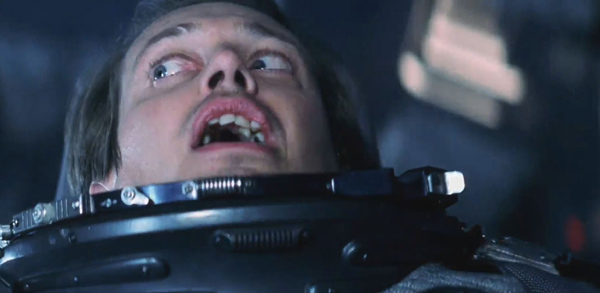
Having said that, I can only hope Steve Buscemi got that tooth growing out of the roof of his mouth fixed after cashing his Armageddon cheque.

Behold, the single least-flattering celebrity close-up in cinema history.

Behold, the single least-flattering celebrity close-up in cinema history.

Mighty Mighty Movie

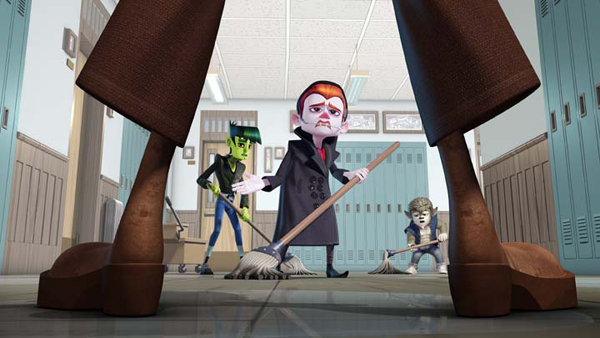
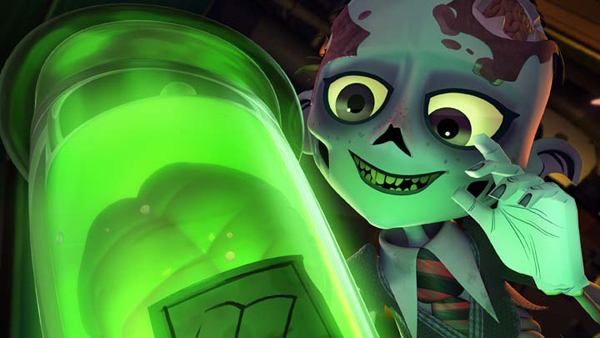
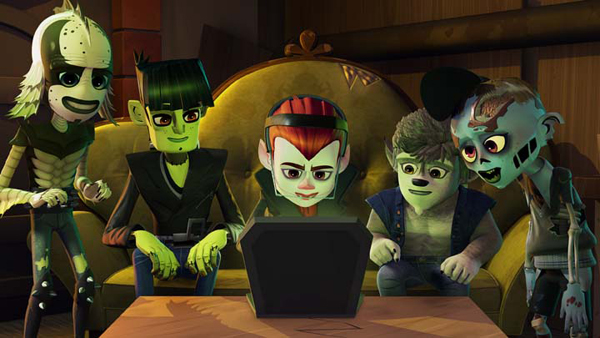
Supposedly I wrote a TV movie. At least, that’s what the imdb tells me.

Here I was thinking it was only an hour-long animated special, but someone somewhere along the way decided it was going to be called a movie, and that’s all there was to it. I guess it’s a movie the same way various world film institutes have decided that a feature film is anything that runs longer than 40 to 45 minutes.

Shrug. Whatever. If Mighty Mighty Monsters were a regular series instead of three hour-long specials, it would just have been an hour-long episode.

My work on the project ended nearly two years ago now. Preliminary discussions with the producers began over a year before that. The upshot was that I wrote two entire hour-long episodes/movies, both of which were supposed to be the third and final special. My first screenplay was paid for and ditched because it was decided, late in the game, that they wanted to tell a different story for part three of the trilogy. The second one I wrote is what got shot.

With literally years of my life ticking away in the interim, I didn’t really pay attention to what was happening with the show. Apparently the first two special-TV-movie-episodes aired and did well. My closing part of the trio was originally slated to run on Teletoon in April and then didn’t. Post-production may have dragged on, I don’t know. But apparently it’s done now. I only know this because I’ve seen stills and a little bit of footage.

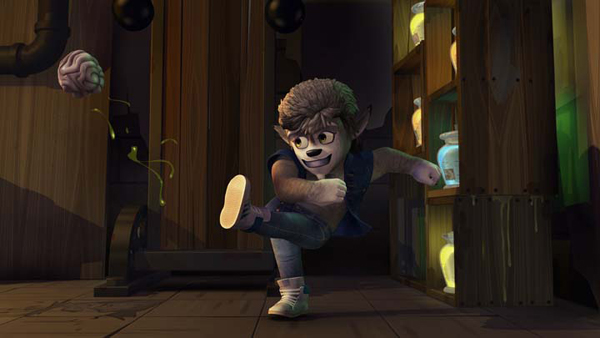
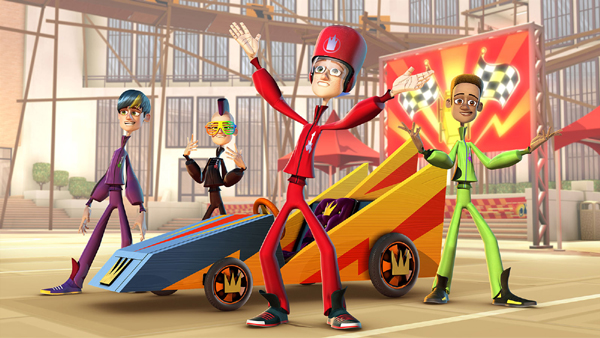
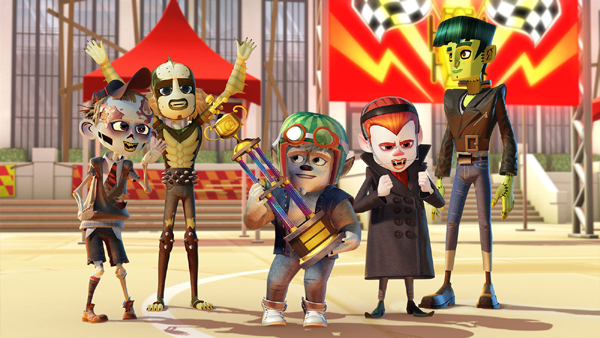
Here are all the individual frames I’ve been able to collect online that are verifiably from my episode, Pranks for the Memories. I’d say SPOILER ALERT, but it’s a cartoon for children. If you’re expecting any great Machiavellian plot twists, turn the channel and go watch HBO.

MMM1

MMM2

MMM3

MMM4

MMM5

MMM6

MMM7

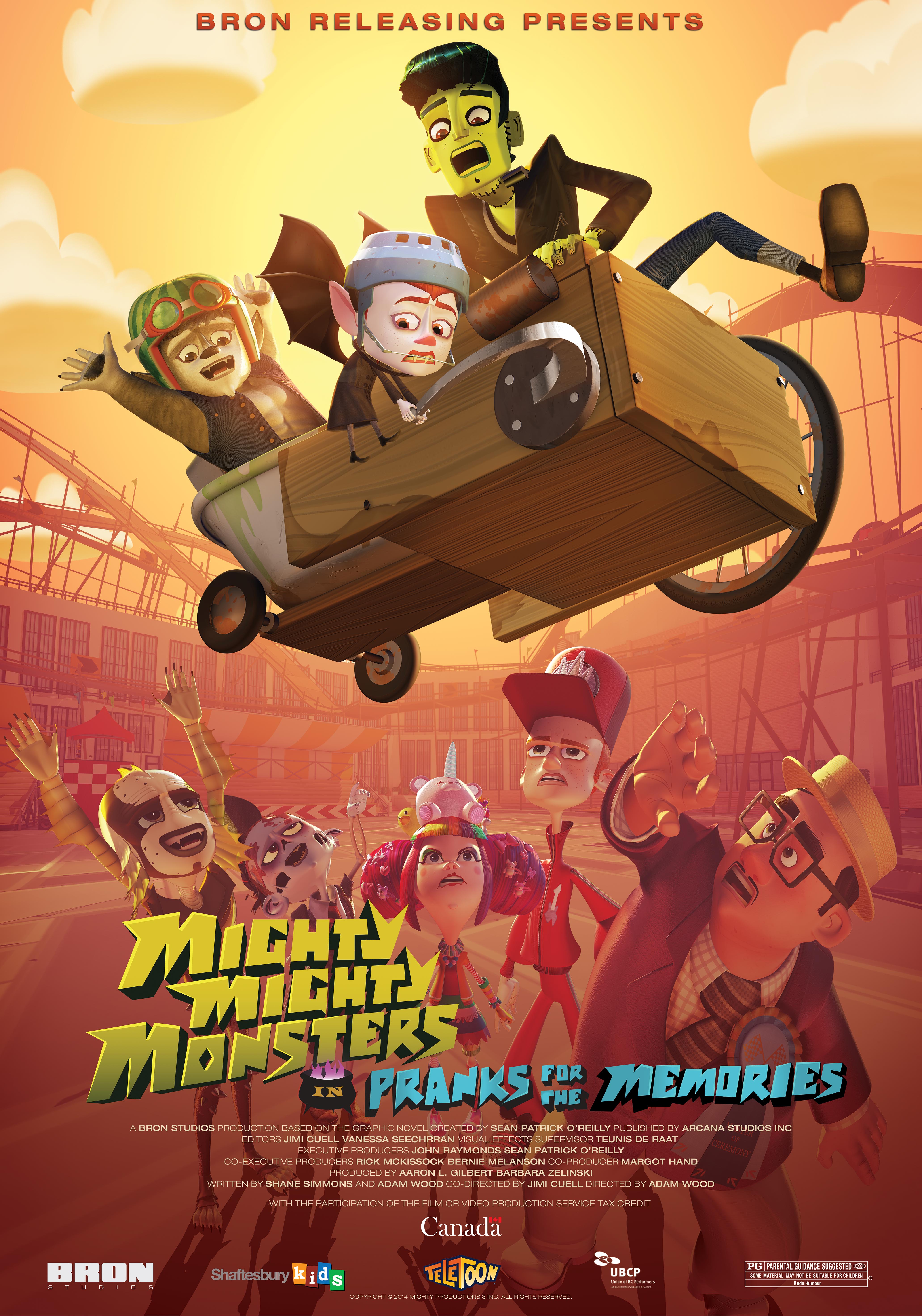
What’s most intriguing to me is the poster. This is the first time I’ve had my name on an actual promotional poster for a release. I guess having a poster for the episode helps make the argument that it’s really a movie after all.

MMMSpecial3

Best guess is that Teletoon will sit on the Mighty Mighty Monsters finale until late October/Halloween, which seems appropriate. Will more TV movies or an actual series follow? Again, shrug. I dunno. I’m just the writer. Nobody tells me anything.